h1

Tailor Made

May 31, 2015

Posted by Kanga. Please do not reblog.
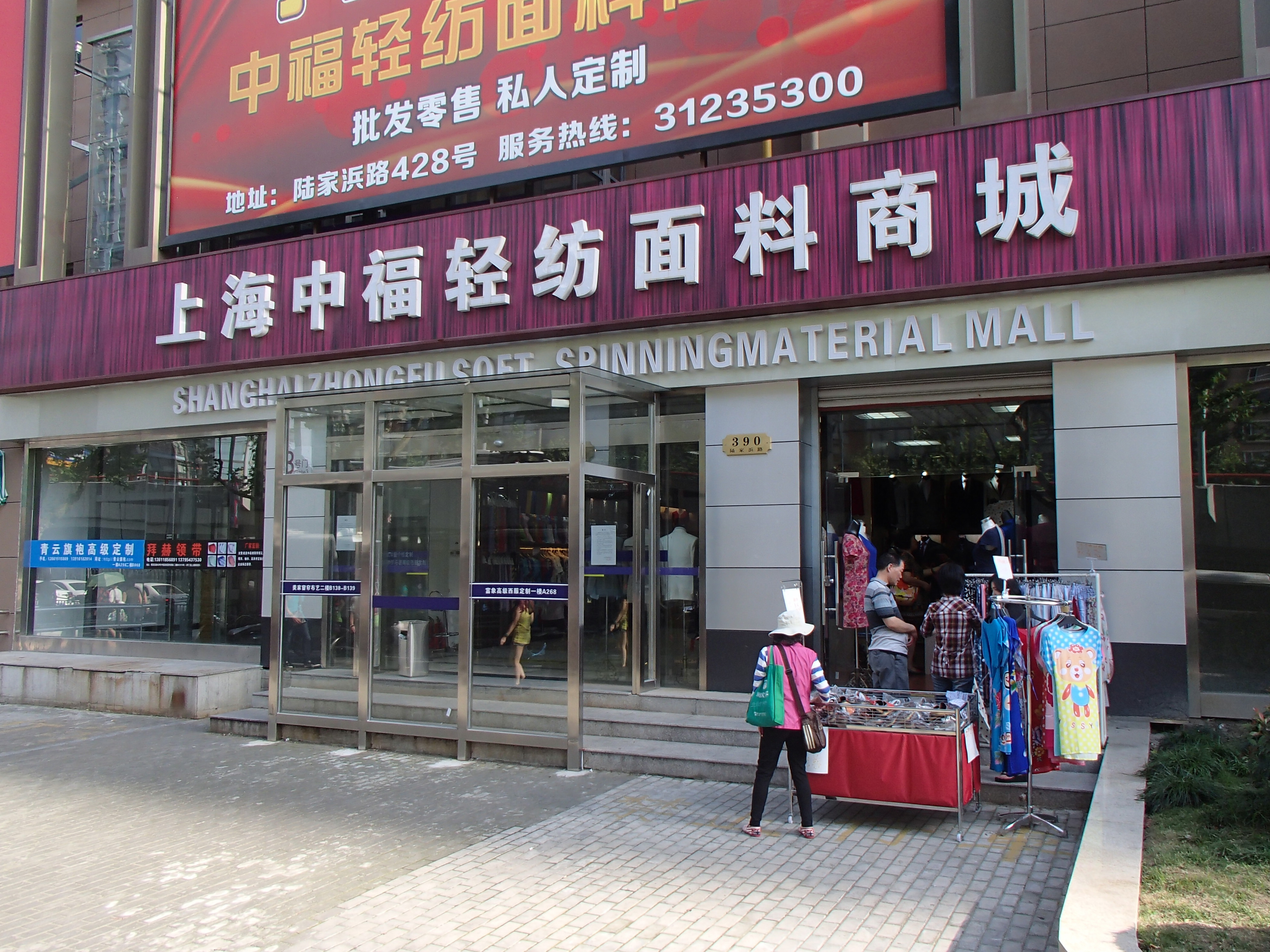
Yesterday’s adventure was to go to the South Bund Soft Spinning Material Market to get new shirts made for Daddybird. ( A suit was contemplated also. I checked, he isn’t running a fever.)

So we hopped on the metro and headed across town.

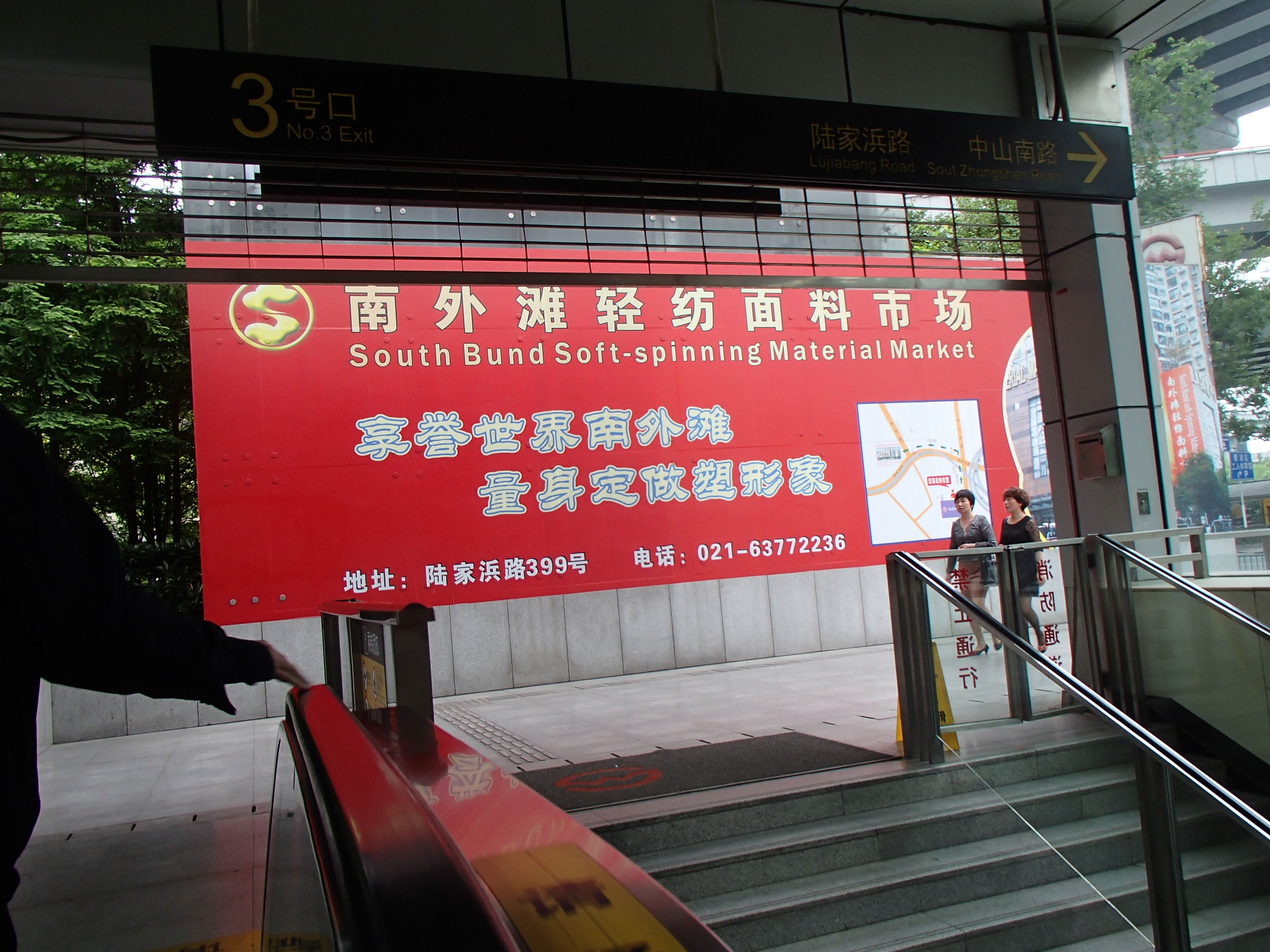
large red sign for the South Bund Soft Spinning Material Martket with a map

The metro exit was clearly marked and then at the top of the exit was this big red sign complete with map of how to get to the market.

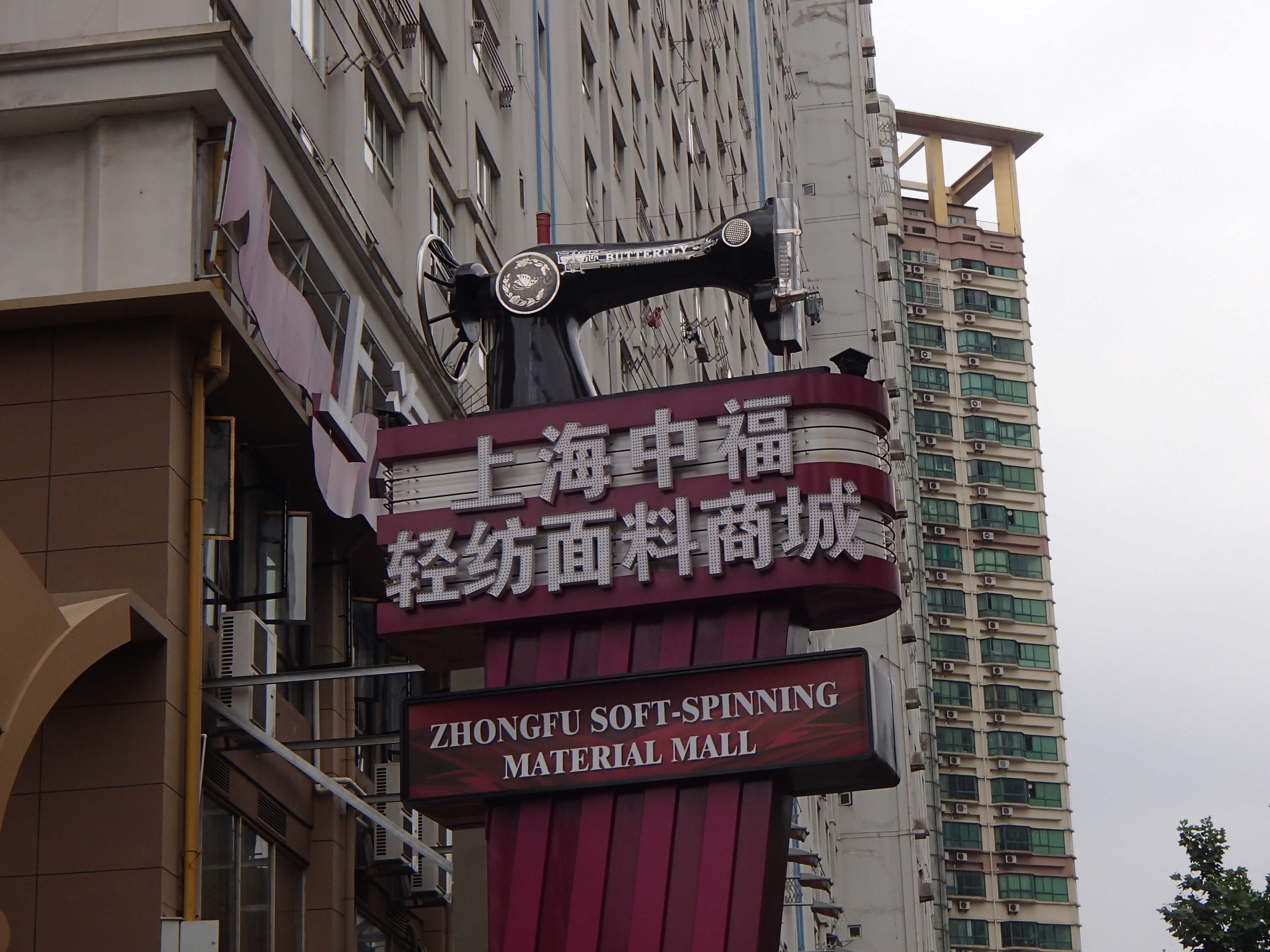
pole sign topped with a sewing machine

This sign was a good clue (and cool looking), but this is actually a competing market. The one we were heading for was across the street.

Street Food

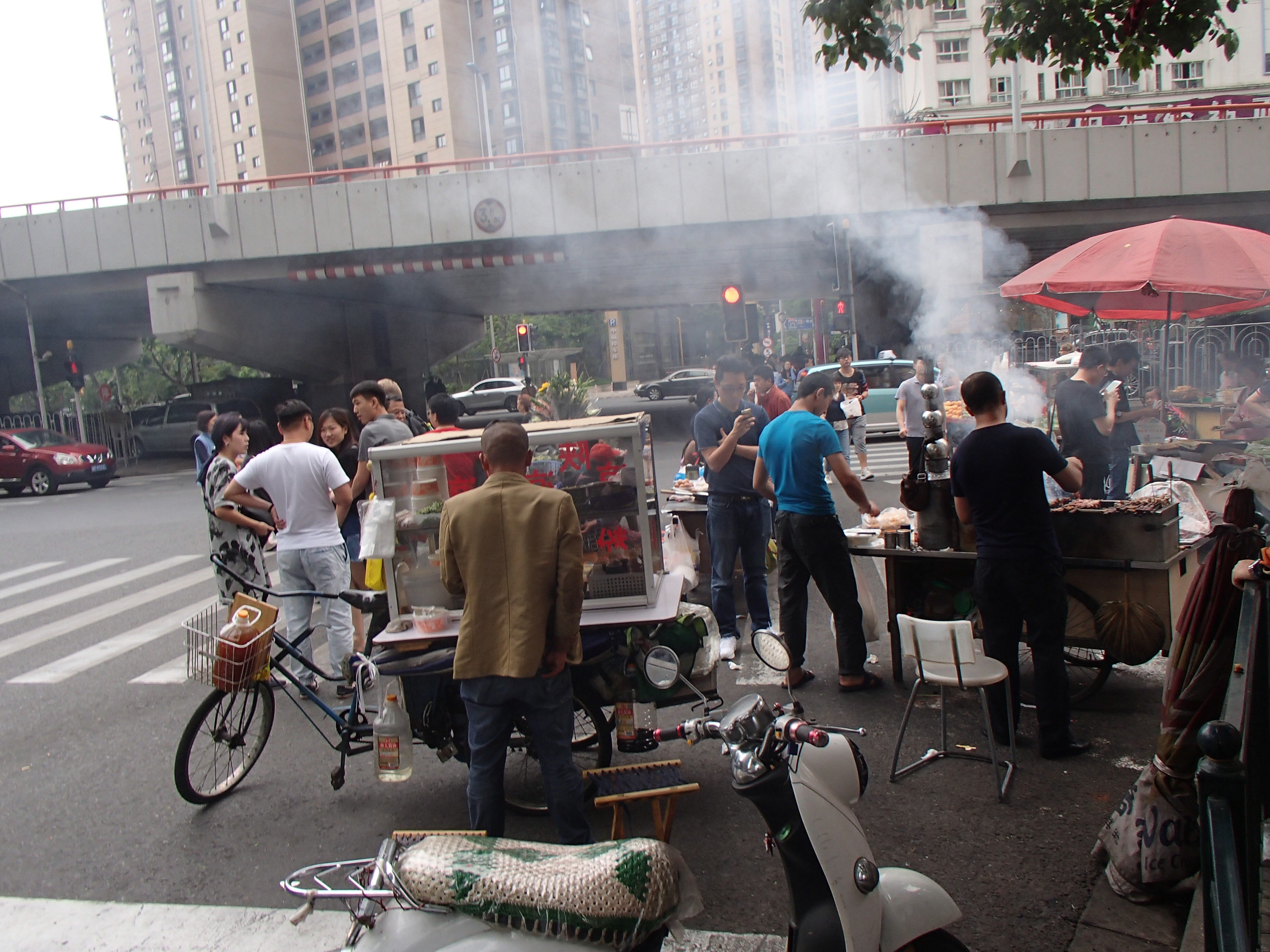
At the corner there were at least 10 food carts extending out into the intersection. Why were they not on the sidewalk?

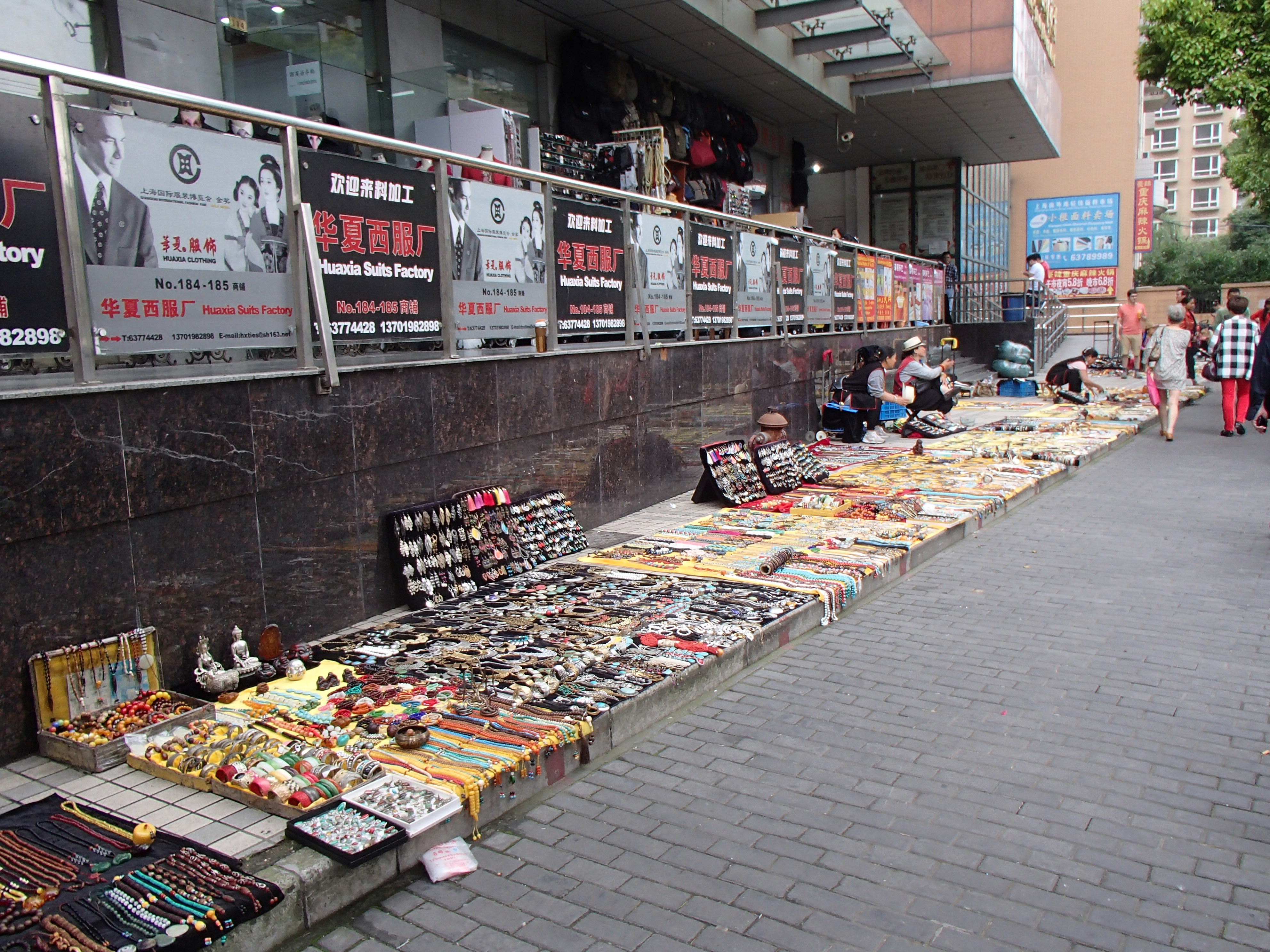
jewelry laid out on the sidewalk

Because the sidewalk is for the jewelry vendors, it seems. Plenty of jade and other interesting things, but not exactly how I prefer to shop for jewelry.

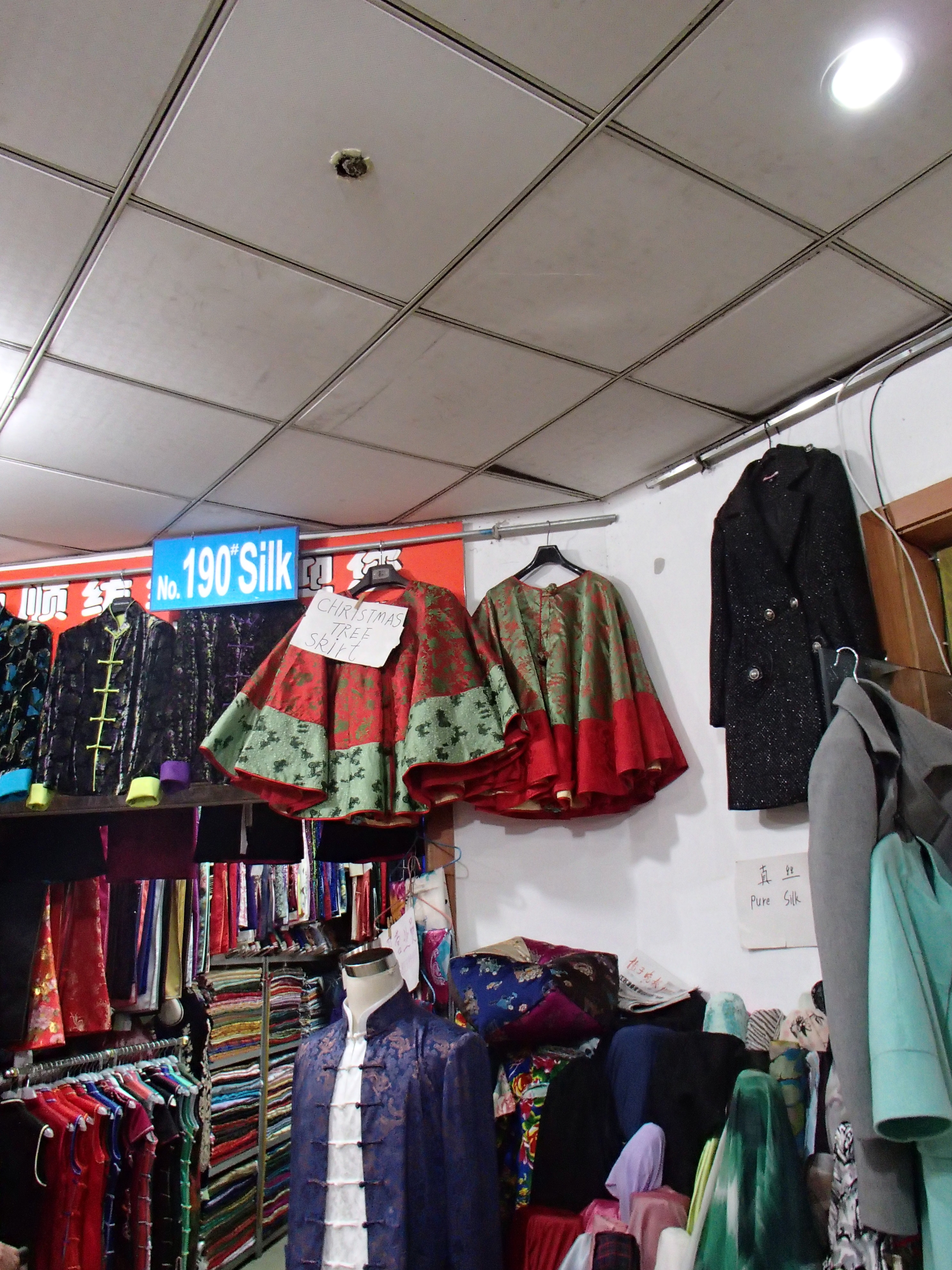
tailor made goods on display including Christmas tree skirts

You can get just about anything custom made here, including Christmas tree skirts.

I was wearing a scarf on my head, so everywhere I went I heard “Scarf Lady!” I did eventually buy two scarves. That was an adventure in haggling. They were two single color cashmere scarves. Nothing particularly complicated or special (no embroidery, etc.). She wanted 500 yuan ($81.00) as her starting price. I said “no” to that. She came down a little, but not much. I said “no” and started to walk away. She came after me, grabbing for my arm and finally said “okay, 300.” It was still too much ($48.00), but I did want them, so I agreed. We hate negotiating SO MUCH. It is so anathema to the American psyche.

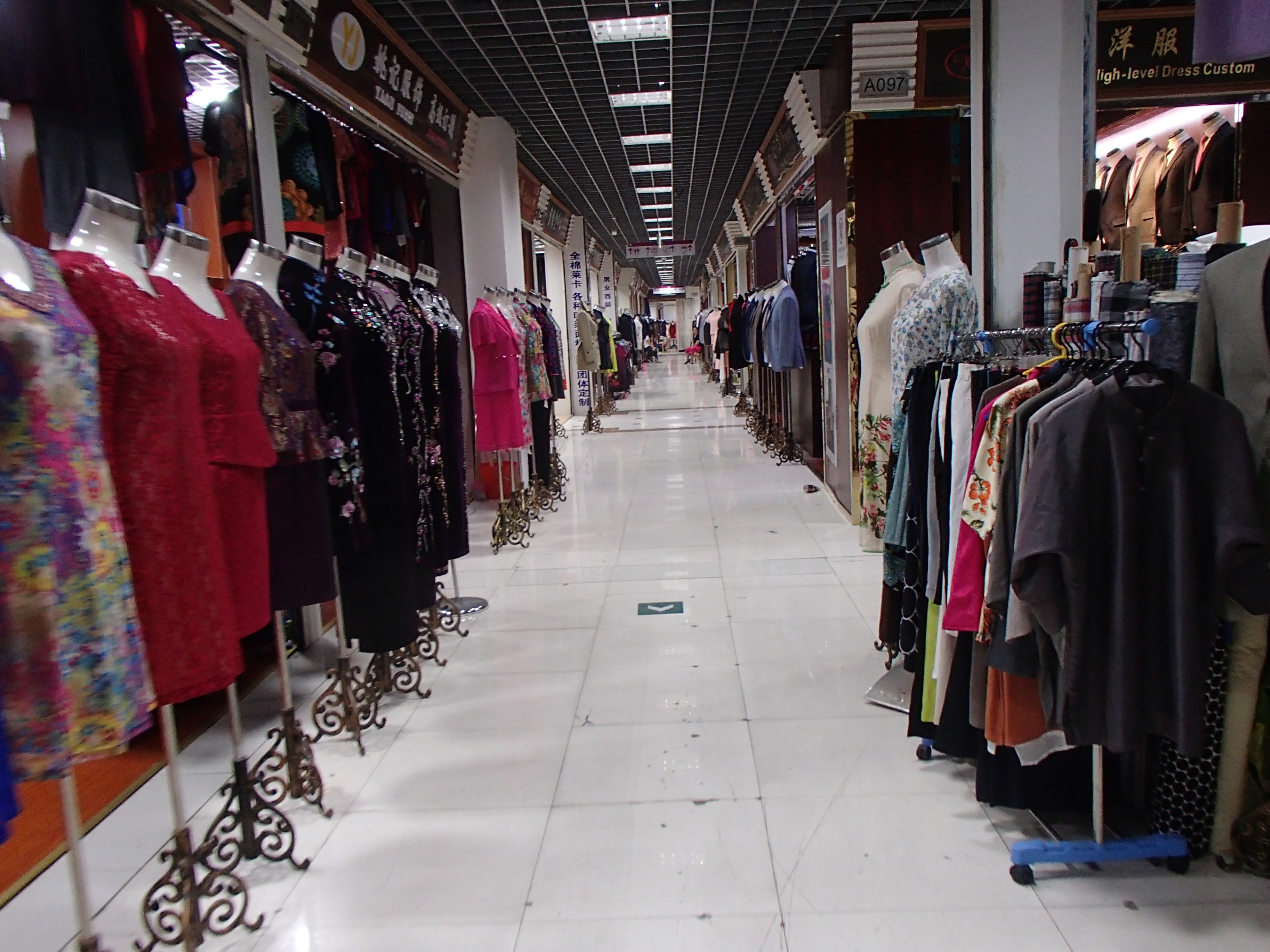
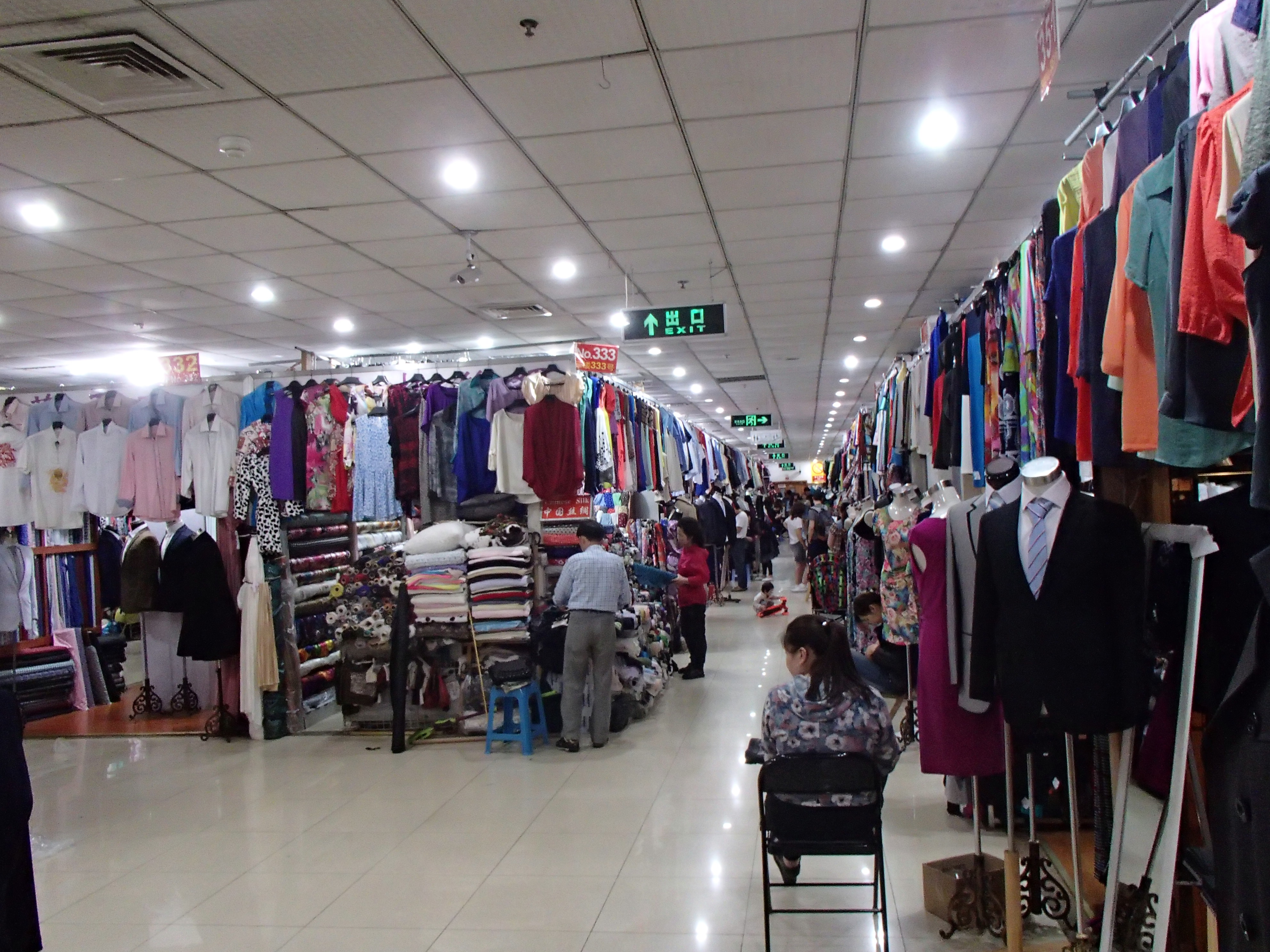
Booths selling tailor made clothes

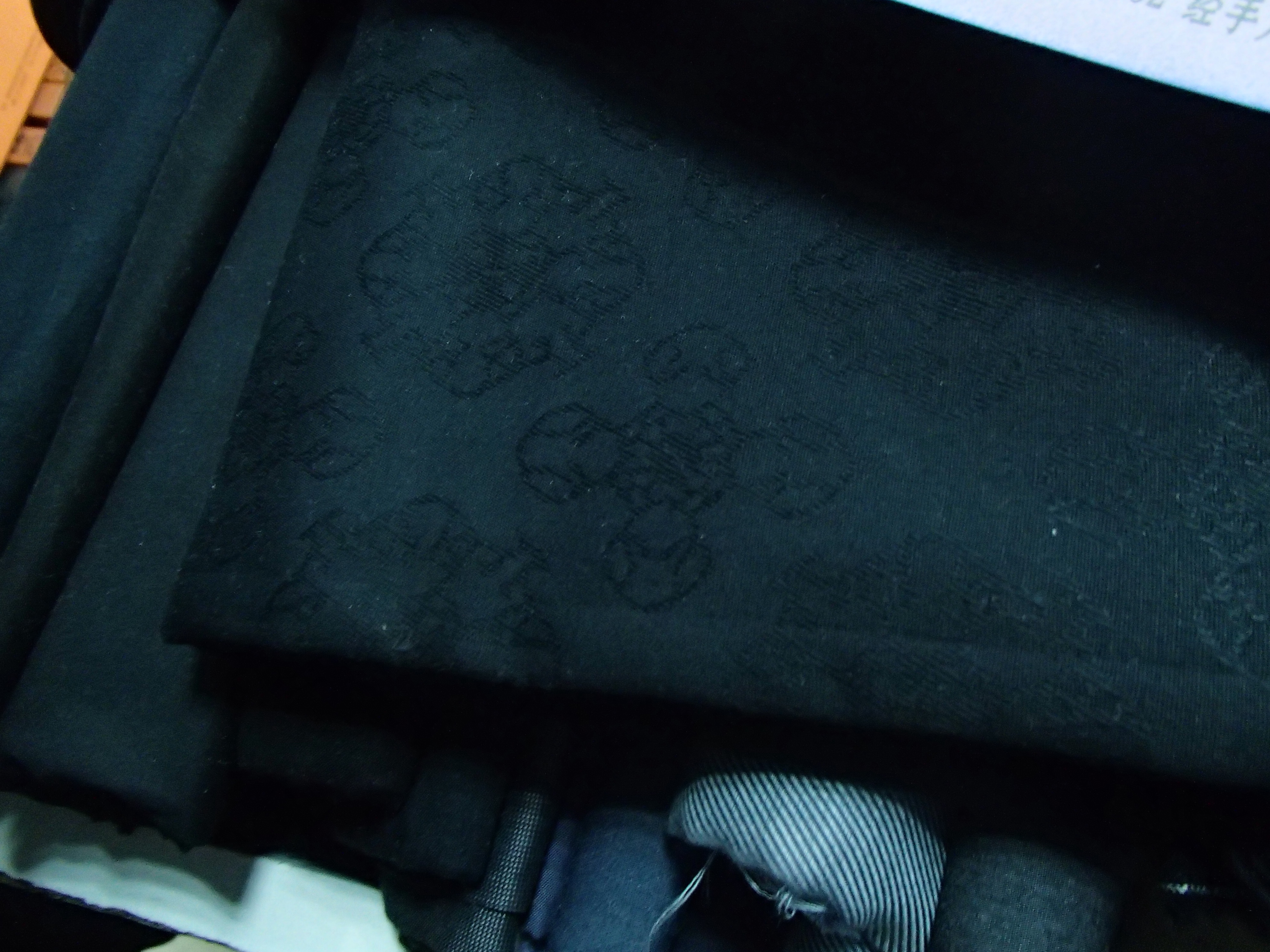
Daddybird’s shopping mission was interesting, too. He was very specific about what he wanted – black shirt material with a design in it (black on black). He had brought his favorite shirt as an example which had a herringbone pattern to it. The shop clerks would see that and say “I have that exact thing” then pull out their fabric sample books which never had the exact thing in them. Also, Daddybird would explain that he wanted a different pattern like flowers or paisley. In three floors of shops (hundreds of shops) there was only one that actually had a fabric that matched what he was looking for.

black fabric with a pattern

Finally, something that satisfied him. So, we ordered two shirts to be made exactly like his favorite shirt, which he had to leave with them. In one week, we will see what we get for our trouble.
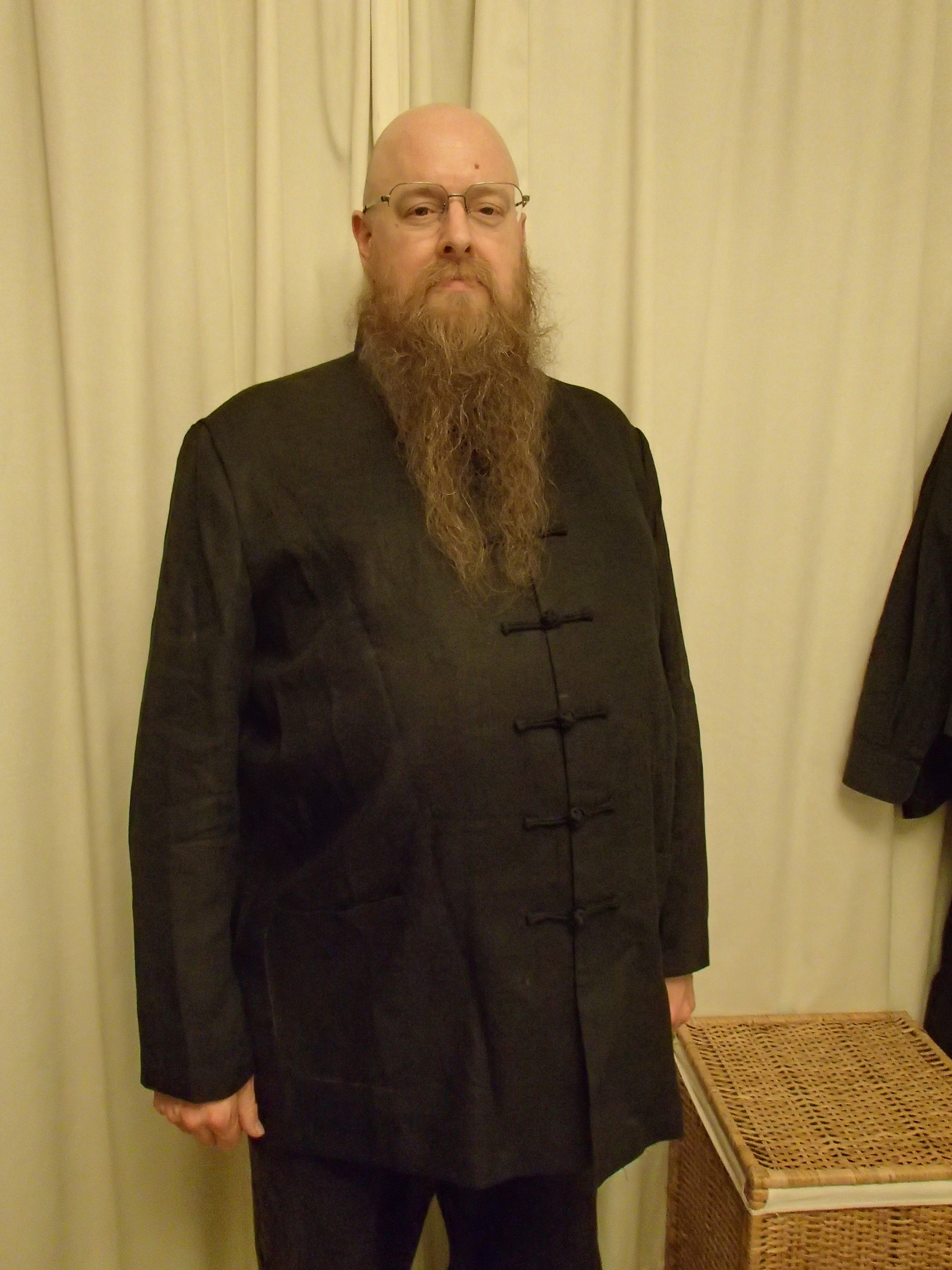
There were several shops with classic Chinese style shirts on display, so we asked at the shop on the main floor under the escalator for a price on having one made for him out of black linen. (I didn’t take a picture, but it is a simple shirt with a band collar, frogs* instead of buttons, and two pockets near the waistline. Not very complicated.) Her starting price was 500 yuan. (This may be a popular starting price for simple things when dealing with foreigners.) So, $81.00 USD for a simple linen shirt, not even silk or brocade. We left that stall and decided to shop around for a better price instead of having to do the negotiation thing. As a seamstress, I find it amusing when their arguments for the high price are that the frogs* or pockets require more fabric. Not 80 bucks worth.
There were three floors and we had been to all three before starting to look for the classic shirt. I had noticed that there were fewer customers on the third floor, so thought we might get a better price up there due to the lack of customers. So, up we went and sure enough we found a shop with linen classic items and their starting price for the same black linen shirt with frogs and two pockets was 350 yuan. Daddybird talked him down to 300 ($48.00), still a bit high, but it is custom made to fit.

In one week, we will see just how well our choices worked out.

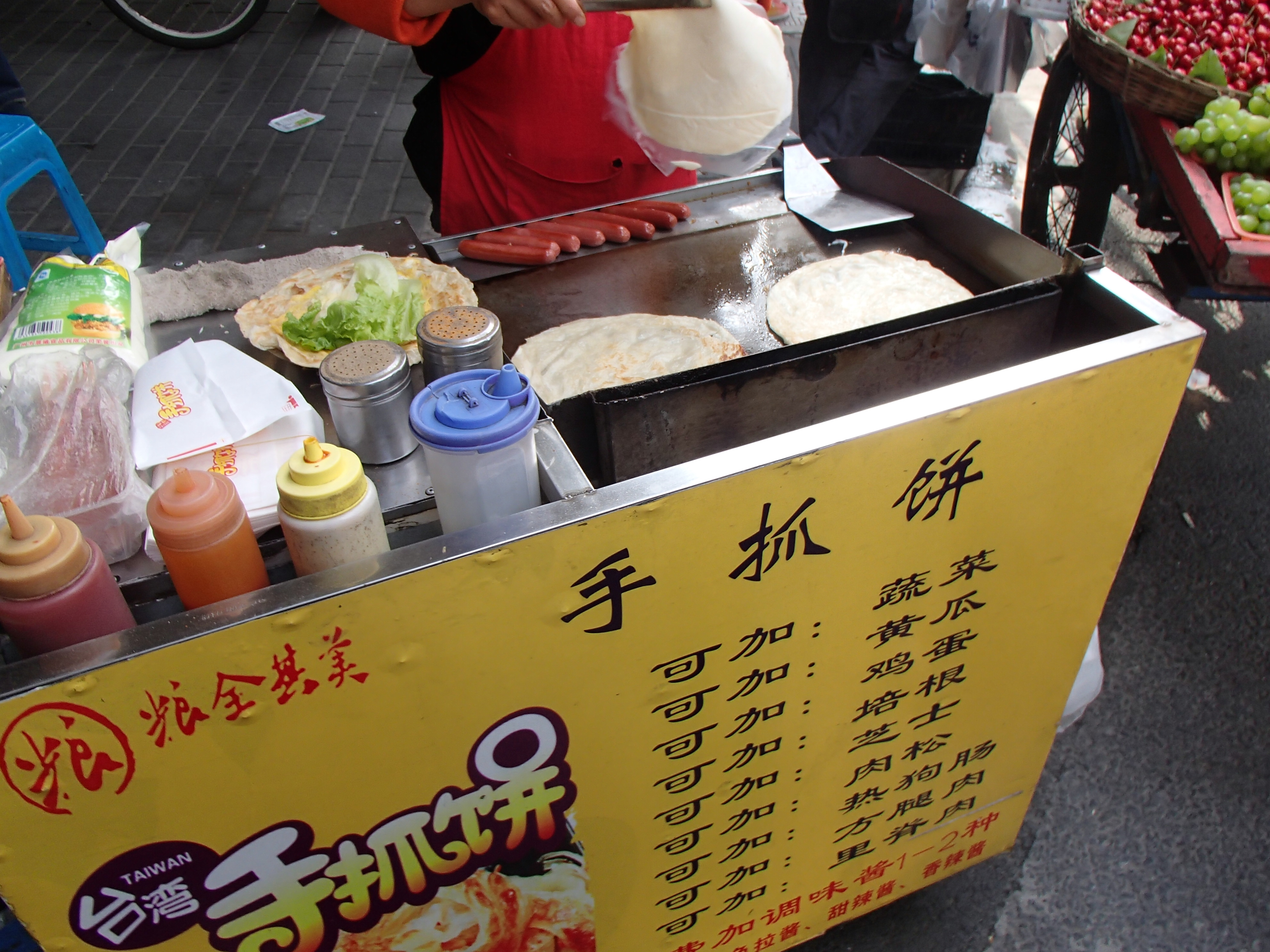
food cart serving egg and cheese wrap

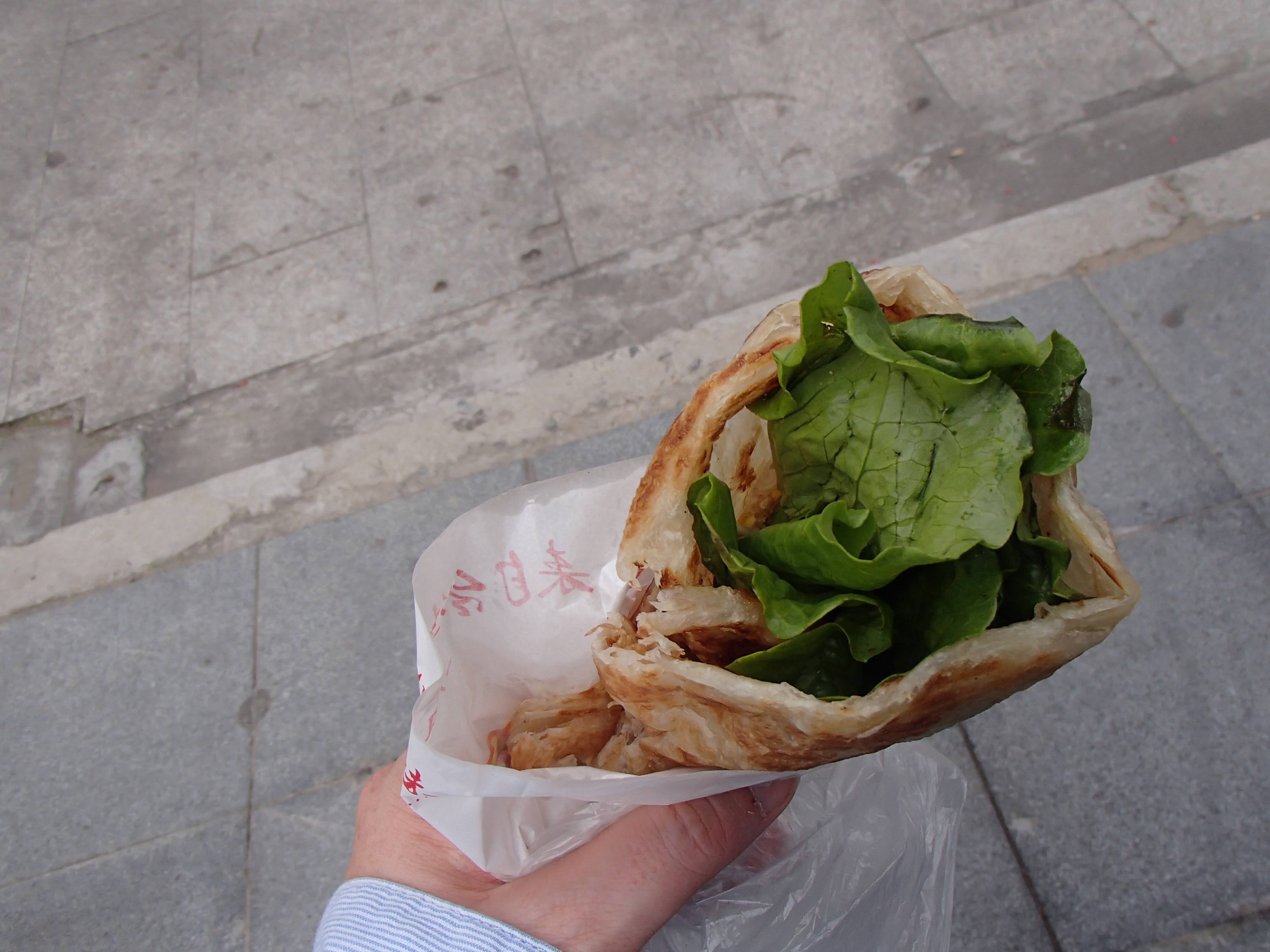
Back out on the street, we stopped for some of that street food. At this cart, we got a flat bread, with fried egg, a slice of cheese and a leaf of lettuce. The price was outrageous – 15 yuan ($2.42). We did not buy a second. It was delicious, but not 15 yuan worth of delicious.

flat bread wrap with egg, cheese, and lettuce

So, we went elsewhere to get dinner. The food cart prices outside a popular market/tourist attraction are too high.

*In case you do not know what a “frog” is, it is a fastener made out of corded fabric with a loop and a knot.

h1

Something’s Afoot

April 23, 2015

Posted by Kanga. Please do not reblog.

It’s possible that reading a paranormal Sherlockian mystery novel* is having an effect on how I look at the world around me.

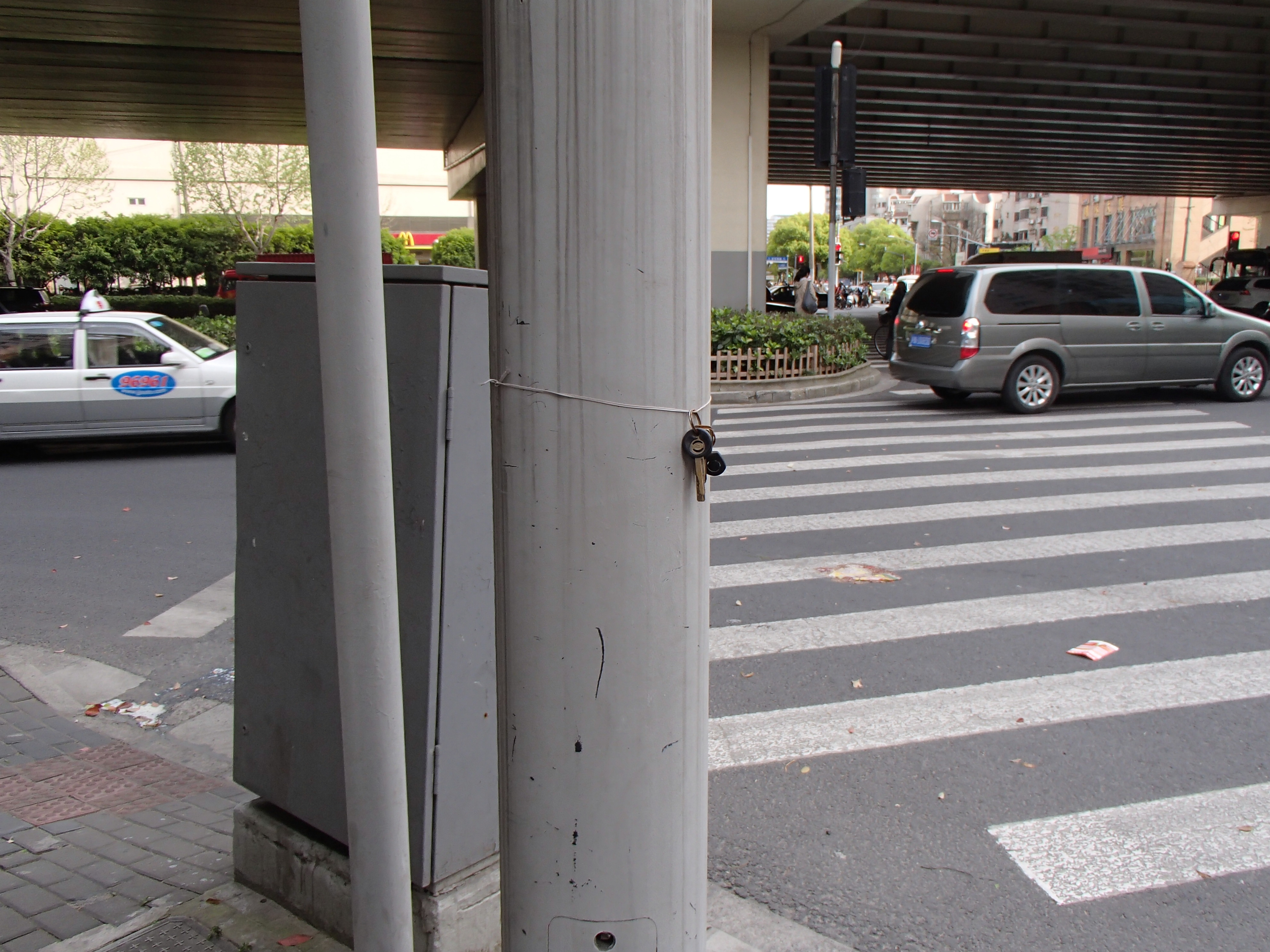
a key ring tied to a lamp post

Last month, DaddyBird noticed these keys tied to a lamp post. They are still there, piquing my curiosity.

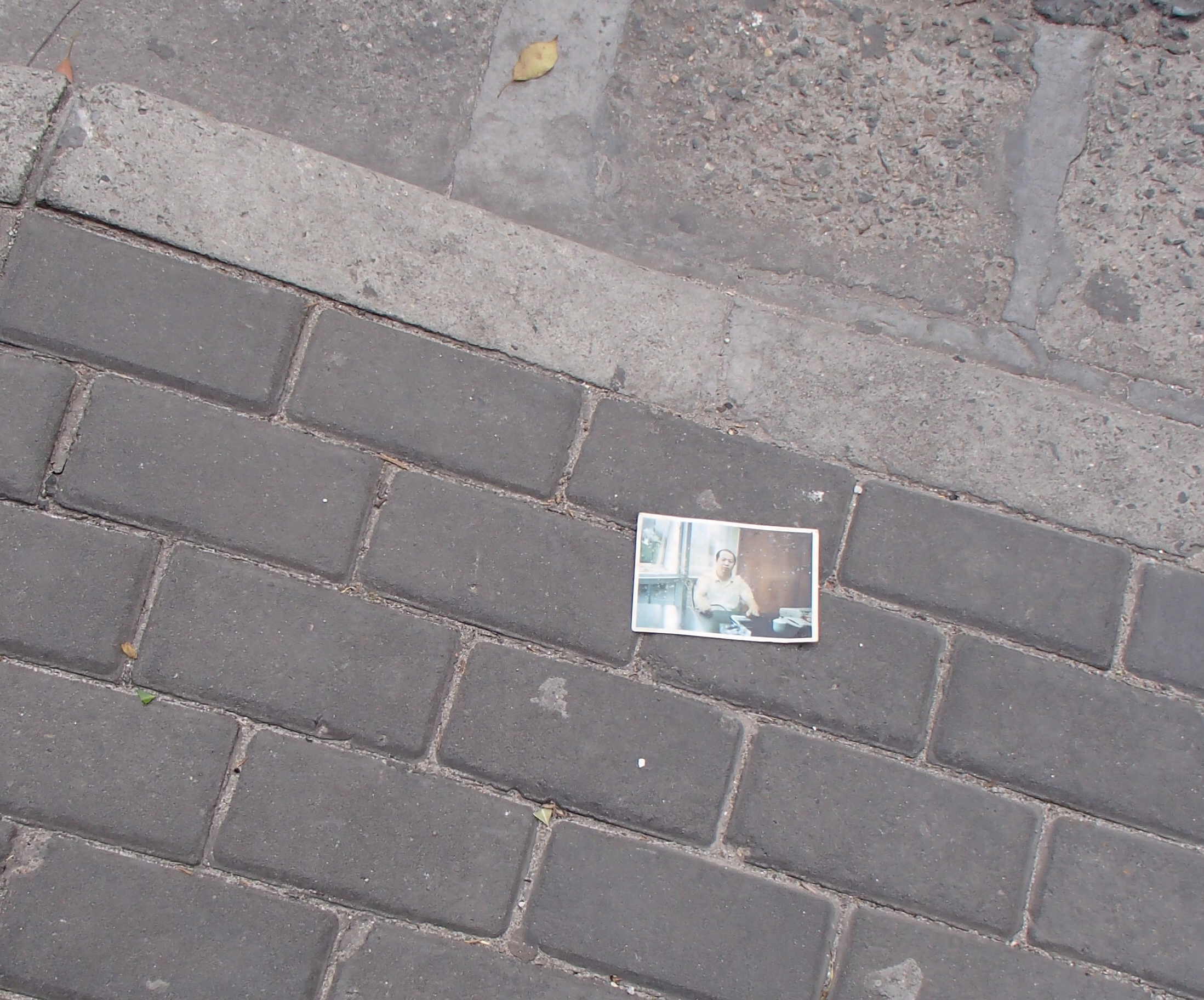
a photograph of a man sitting at a desk laying on a street curb

This photo appeared one day, just below the keys on the lamppost. I start to wonder about the story of this street corner.

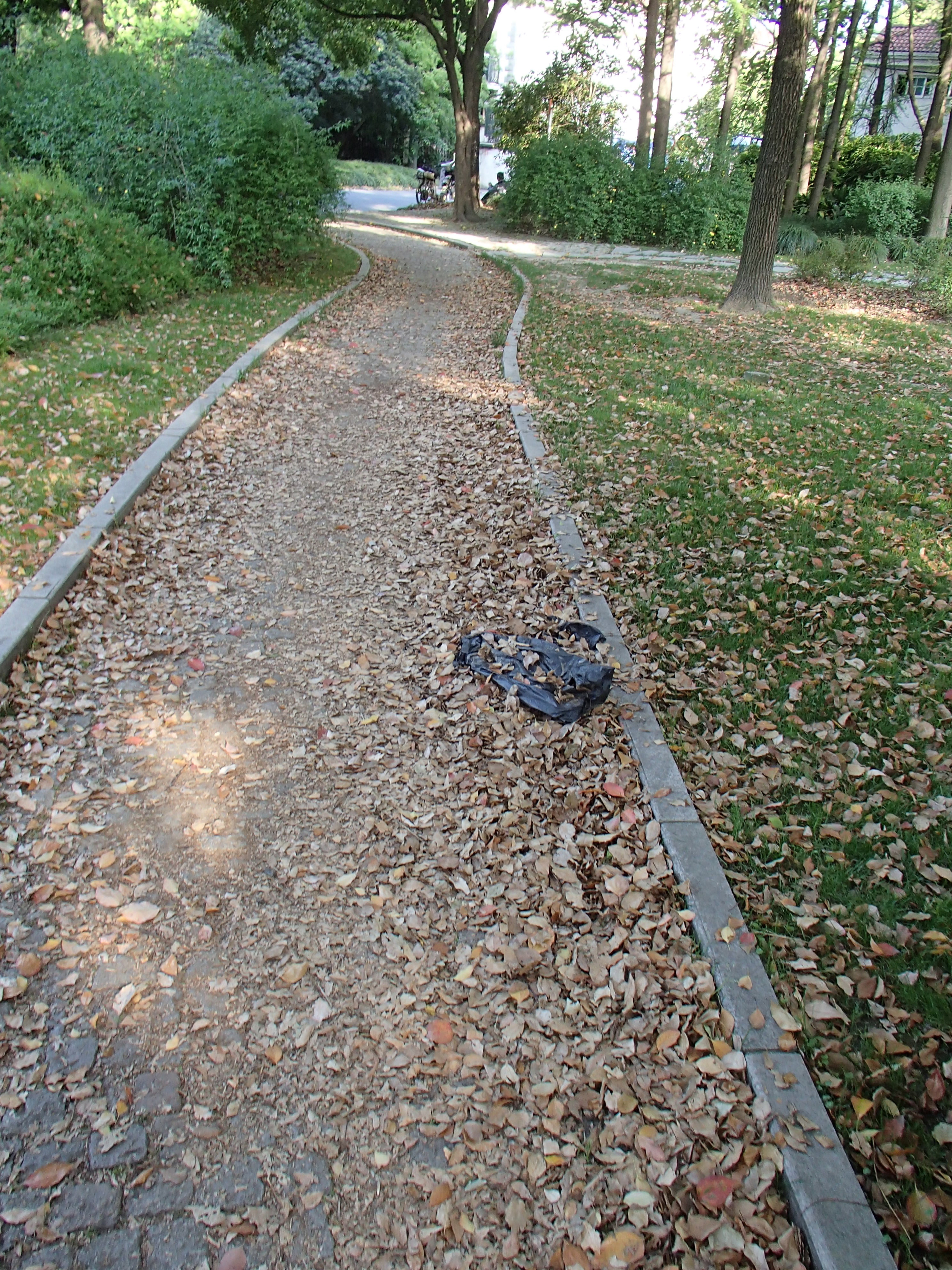
a park path covered in leaves

Another mystery appeared in our park. The leaves had been swept into piles, but abandoned, as was the broom and garbage bag. I wondered what happened to the sweeper. The piles have since dissipated with traffic. The broom has disappeared, but the bag remains.

*Jackaby by William Ritter ISBN 9781616203535

h1

Historical Walking Tours, Shanghai

April 12, 2015

Posted by Kanga. Please do not reblog.

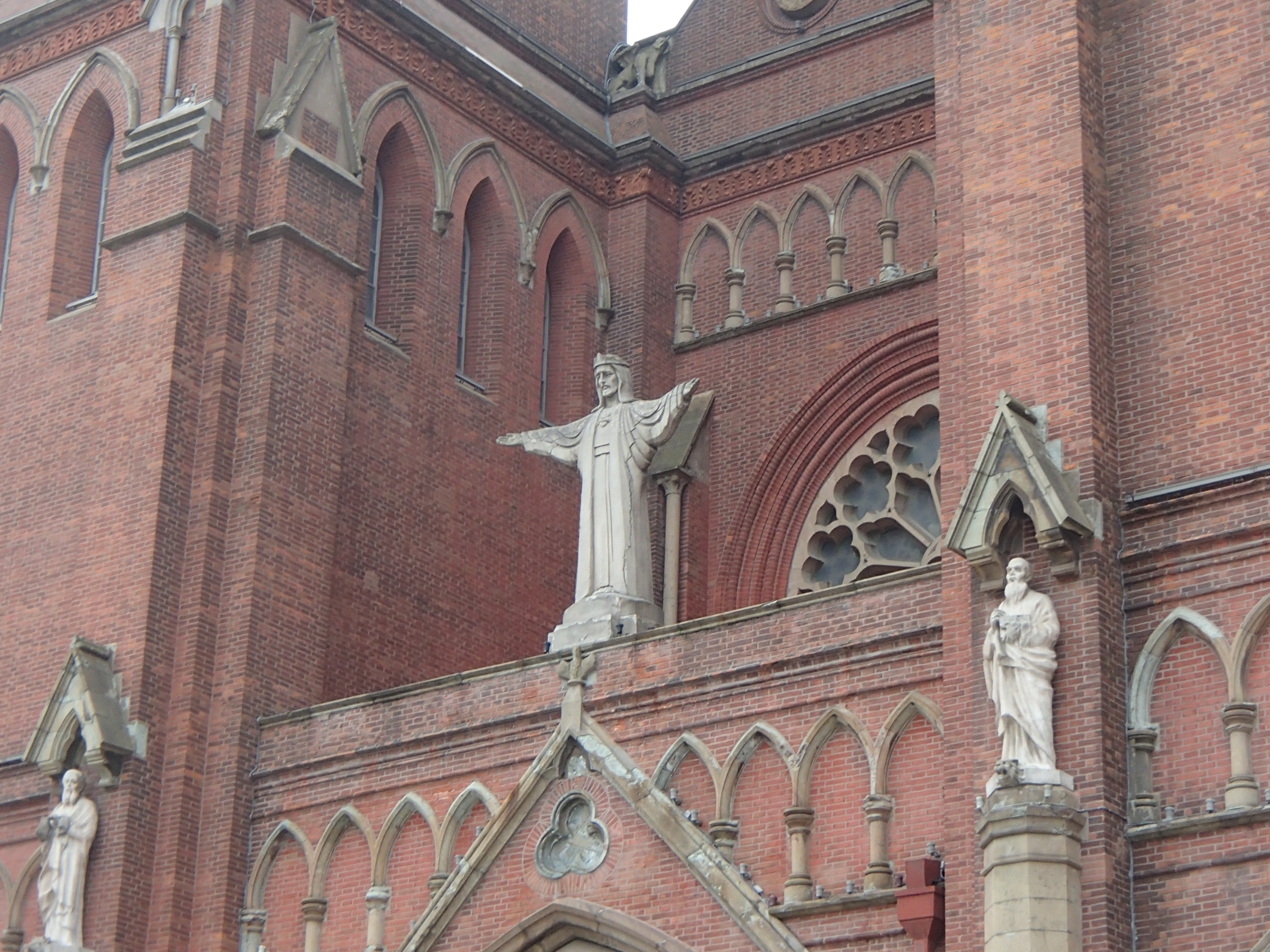
Statue of Christ above the door of the church

The last two Saturdays we have gone on walking tours with Historic Shanghai. The first included the Jesuit buildings of the Xujiahui area.

Background information: Father Matteo Ricci came to China in 1582. He learned Mandarin Chinese and formed a strong friendship with Xu Guangqi, a scholar and political figure. The Xu family donated land to the Jesuits who built a cathedral and many related buildings.

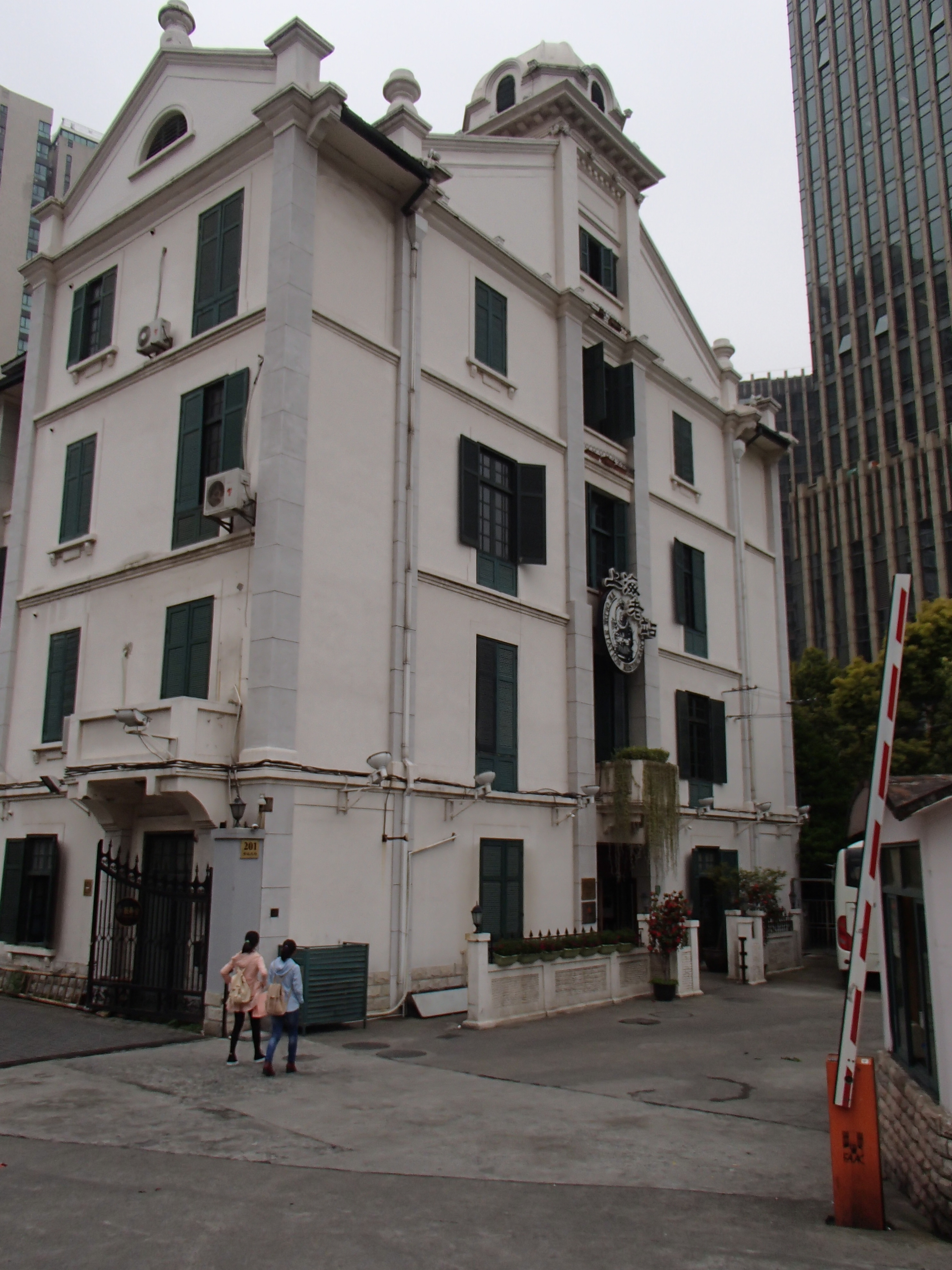
We began in the Virgin Mary Convent which is now a restaurant. It is very close to the original condition because it was a convent until the 1990’s, so remodeling has been minimal.

five story white building

We began with a lunch composed of traditional Shanghai dishes. All yummy, well, except for the spicy peanuts.

The tour included the convent, the College of St. Ignatius, the biblioteca (library), the cathedral, the observatory, and the orphanage. There were many more Jesuit buildings in this area, but these are all that remain.

To see all the pictures, click here. (113 photos)

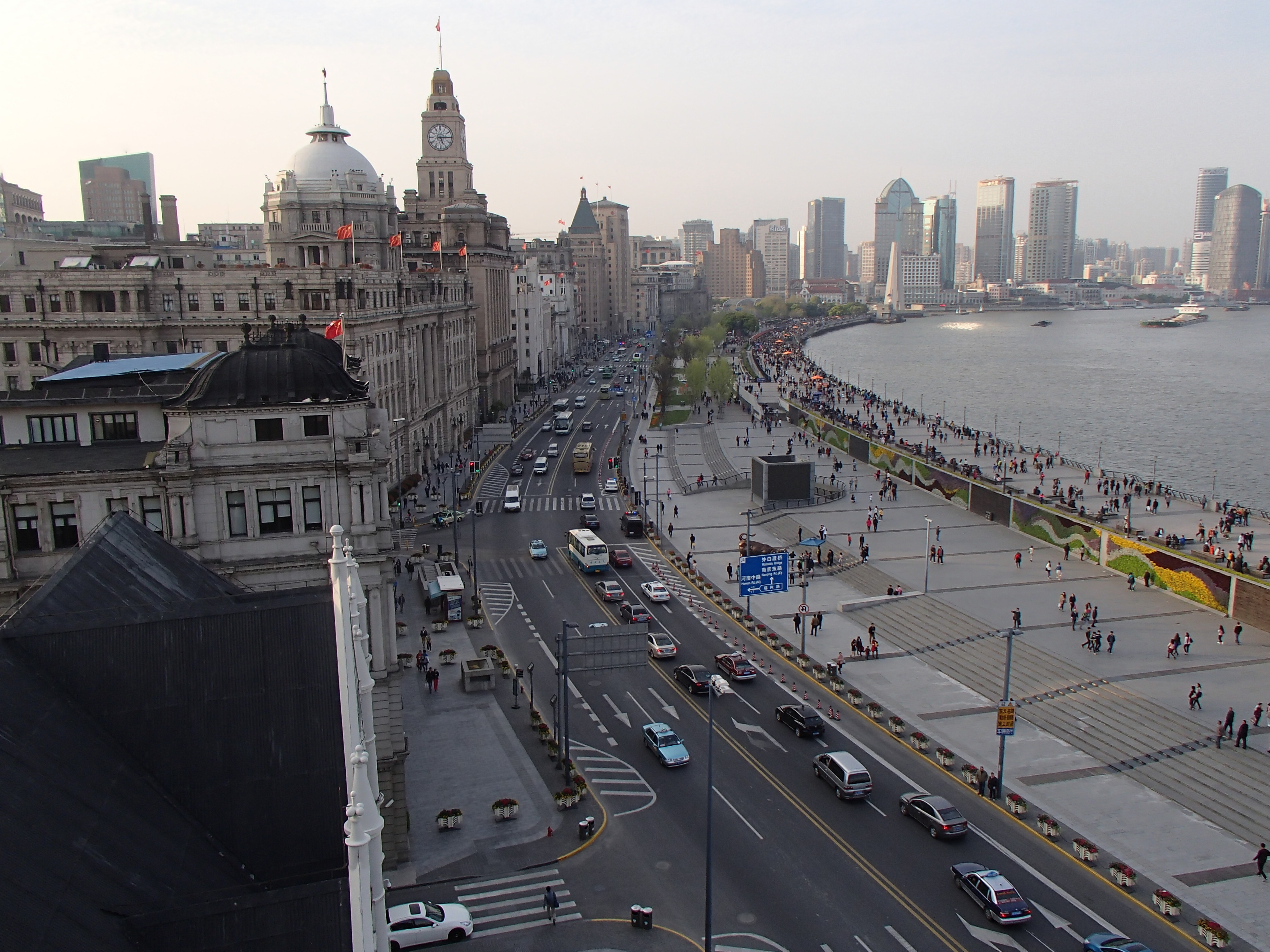
The second walking tour was of the Bund. This is on the bank of the Huangpu River. This was the center of the Western business trade. There are several generations of buildings, beginning with late 1800’s to the present day.

We began at the former British Consulate and walked south to Bund #1 the Asiatic Petroleum Company building which is currently vacant. I have included pictures taken before and after the tour while walking from and back to the metro station.

To see all the pictures, click here.  (275 photos)

arial view of the Bund from the 7th floor of a building

h1

The Great Wall

April 5, 2015

Posted by Kanga. Please do not reblog.

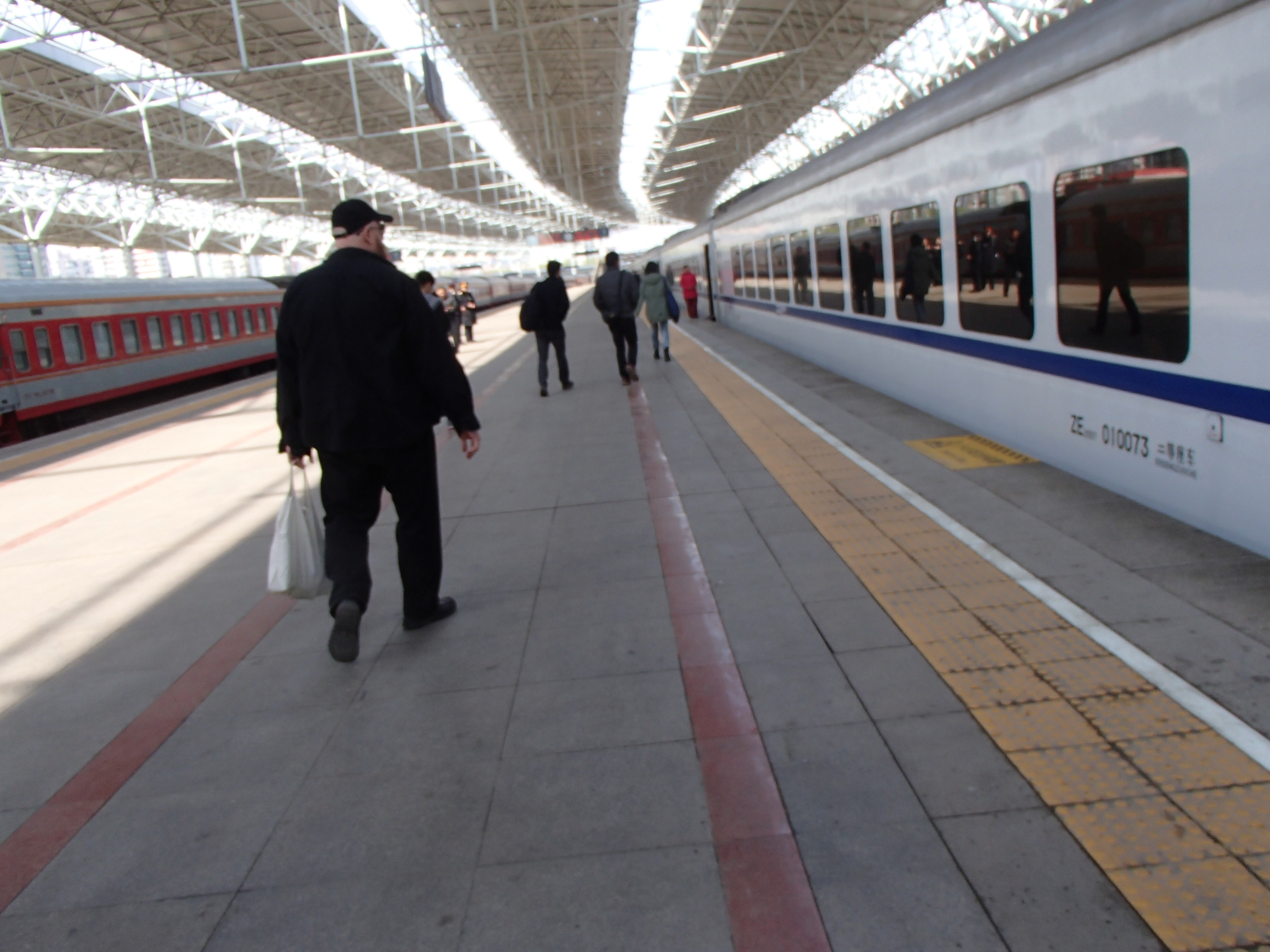
train platform

Taking a day trip from Beijing to the Great Wall at Badaling is one of the cheapest and easiest things a tourist can do.

1. Take the city metro train to the North Beijing Railway Station (3 or 4 yuan)
2. Take the S2 train to Badaling (6 yuan, really 6 yuan [$1.08] for over an hour on the train)
3. Take the free bus from the Badaling train station to the Great Wall.
4. Entrance to the Great Wall is 40 yuan per person.
5. When you are ready to leave, it’s back to the train station and another 6 yuan for the trip back to Beijing.
6. Metro back to your starting point 3 or 4 yuan.
Total 3 + 6 + 40 + 6 + 3 = 58 yuan = $9.67 per person

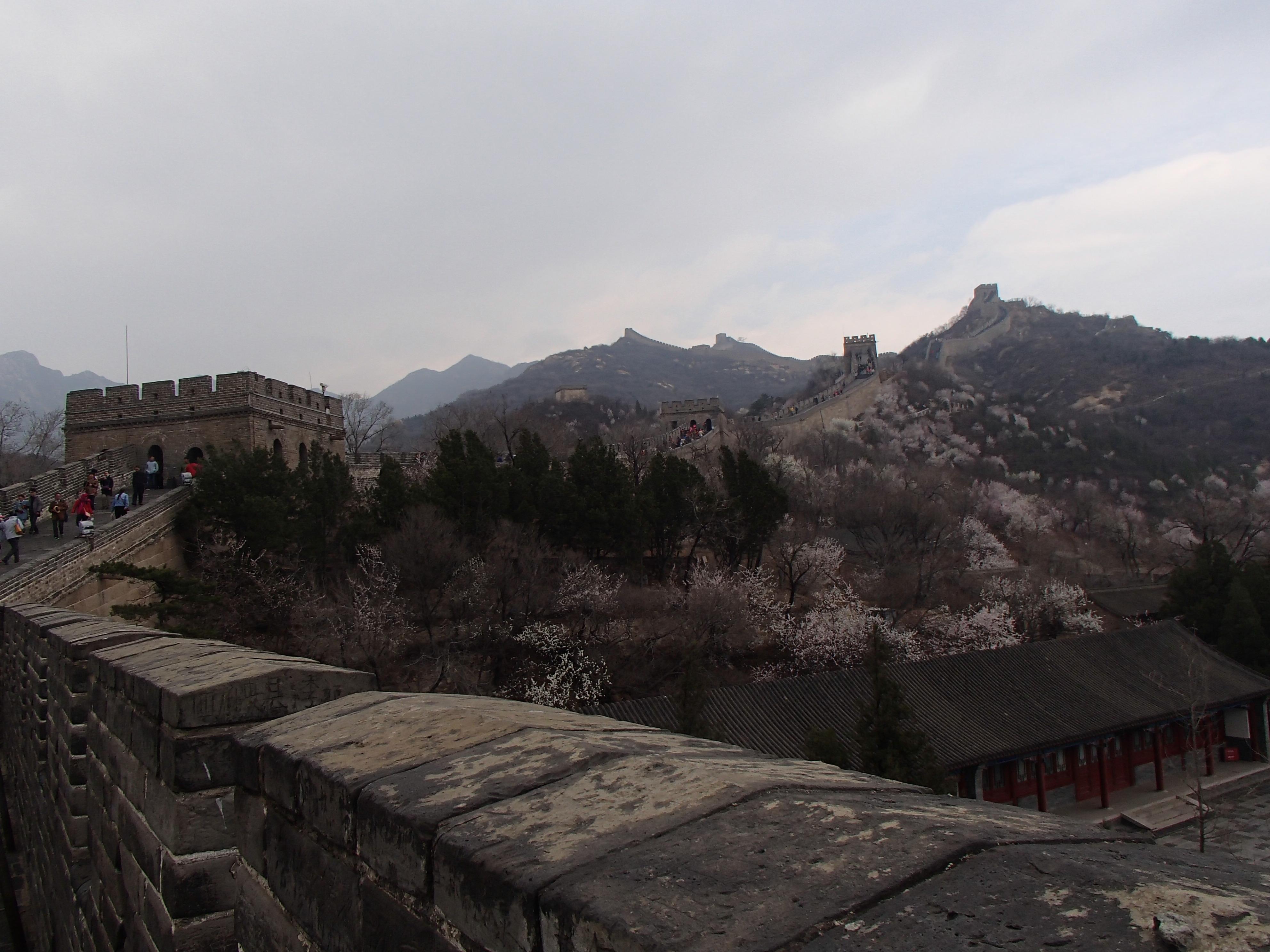
(Also note that the Great Wall is in the mountains, so unless you go in the heat of the summer, take a good coat, gloves, and scarf. I was SO cold.)

The Great Wall of China, mountains, blooming trees

To see all the pictures, click here for The Great Wall (163 photos)
Click here for our last day in Beijing (31 photos)

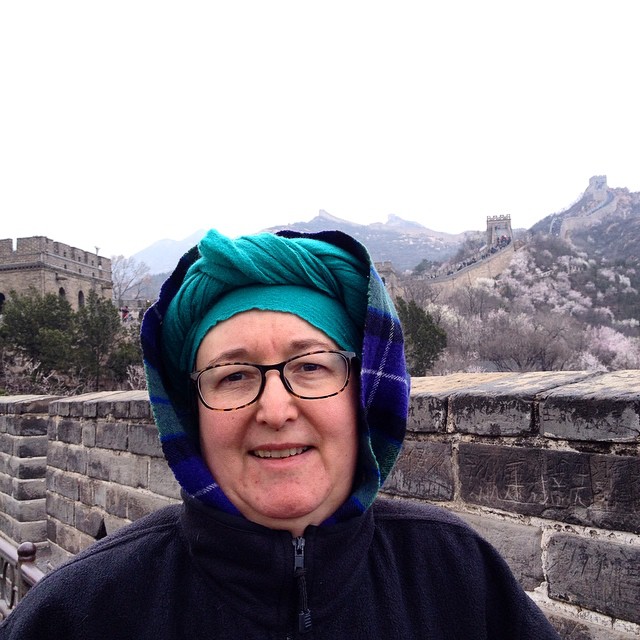
author on the Great Wall

So, now I have been to 2 of the 7 new wonders of the world — Petra and the Great Wall — only 5 more to go.

h1

Bullet Train to Beijing

April 1, 2015

Posted by Kanga. Please do not reblog.

My intention was to do a blog post for each day of the trip, but that has not worked out. Uploading pictures via the hotel wifi is a time consuming project and I do like to sleep occasionally, especially when exhausted. So, now that it is day five in our seven day trip to Beijing, I am staying off my feet, hanging around the hotel room, and can get a blog post up.

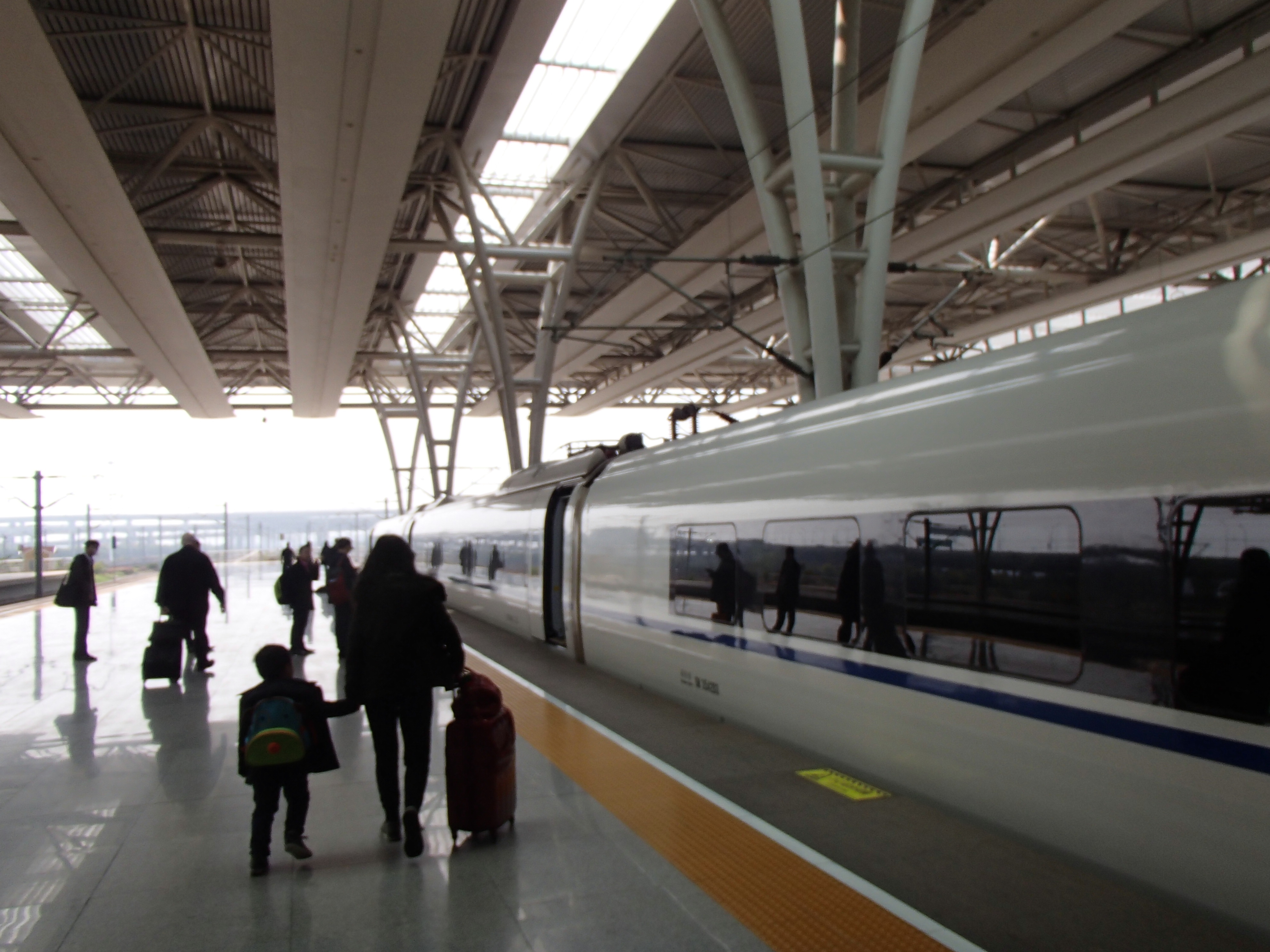
train and train platform

It is spring break and we haven’t traveled outside of Shanghai since we arrived, so decided it was time to hop the bullet train to Beijing. This is actually a pretty easy thing to do, except for buying the tickets. DaddyBird went to the train station to purchase them, because he wasn’t able to do it online. Apparently, to purchase online you have to be a Chinese national. If you go in person to buy the tickets you can only buy “three days in advance” which when pointed out on the calendar includes the day of travel, so it is really only 24 hours in advance for all practical purposes. So, we left Shanghai with departure tickets only, no return tickets. Leap of faith. Since then, DaddyBird has been able to get a booking service to obtain our return tickets for us. This was important, because the tickets were selling out.

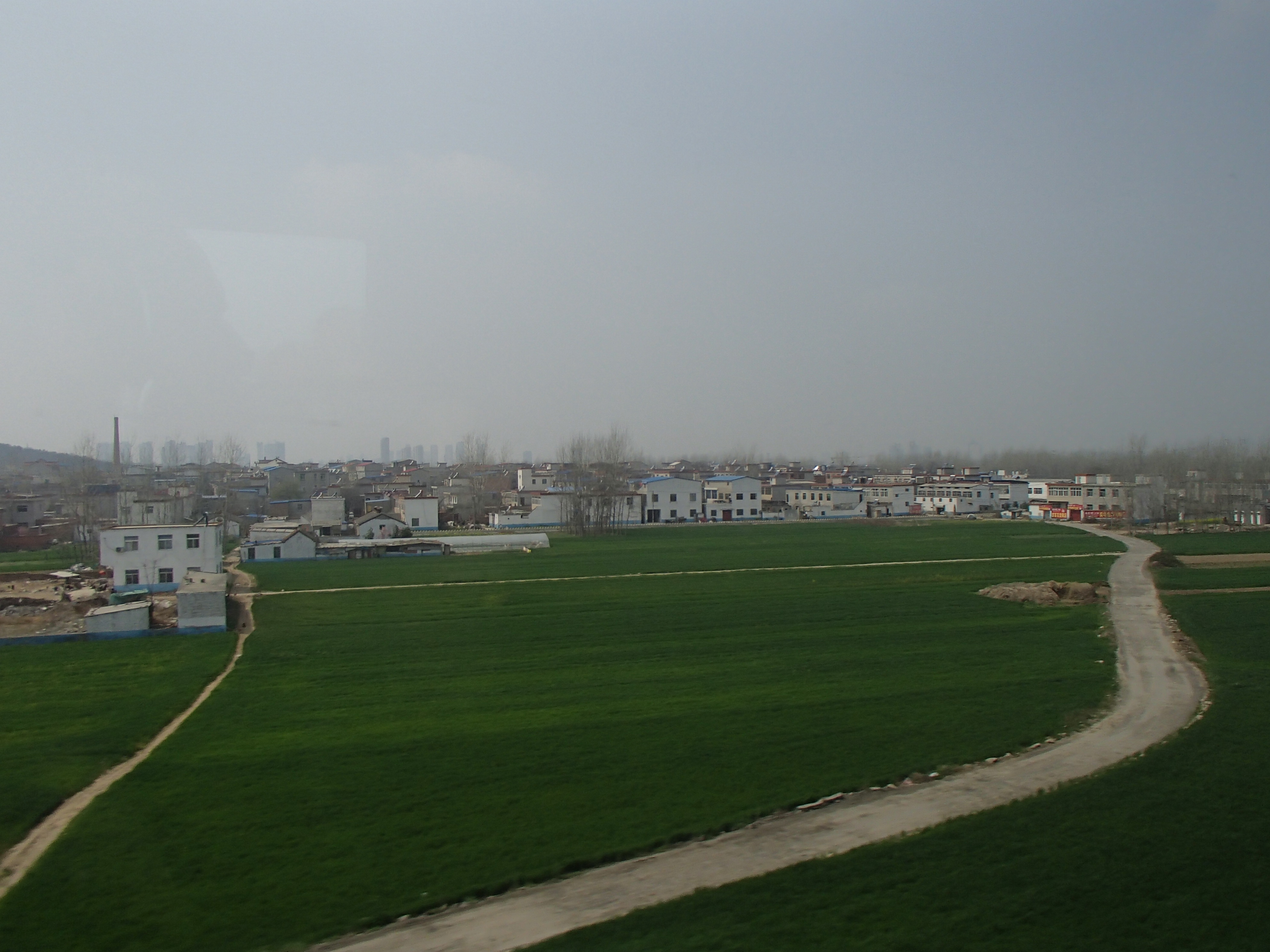
green field

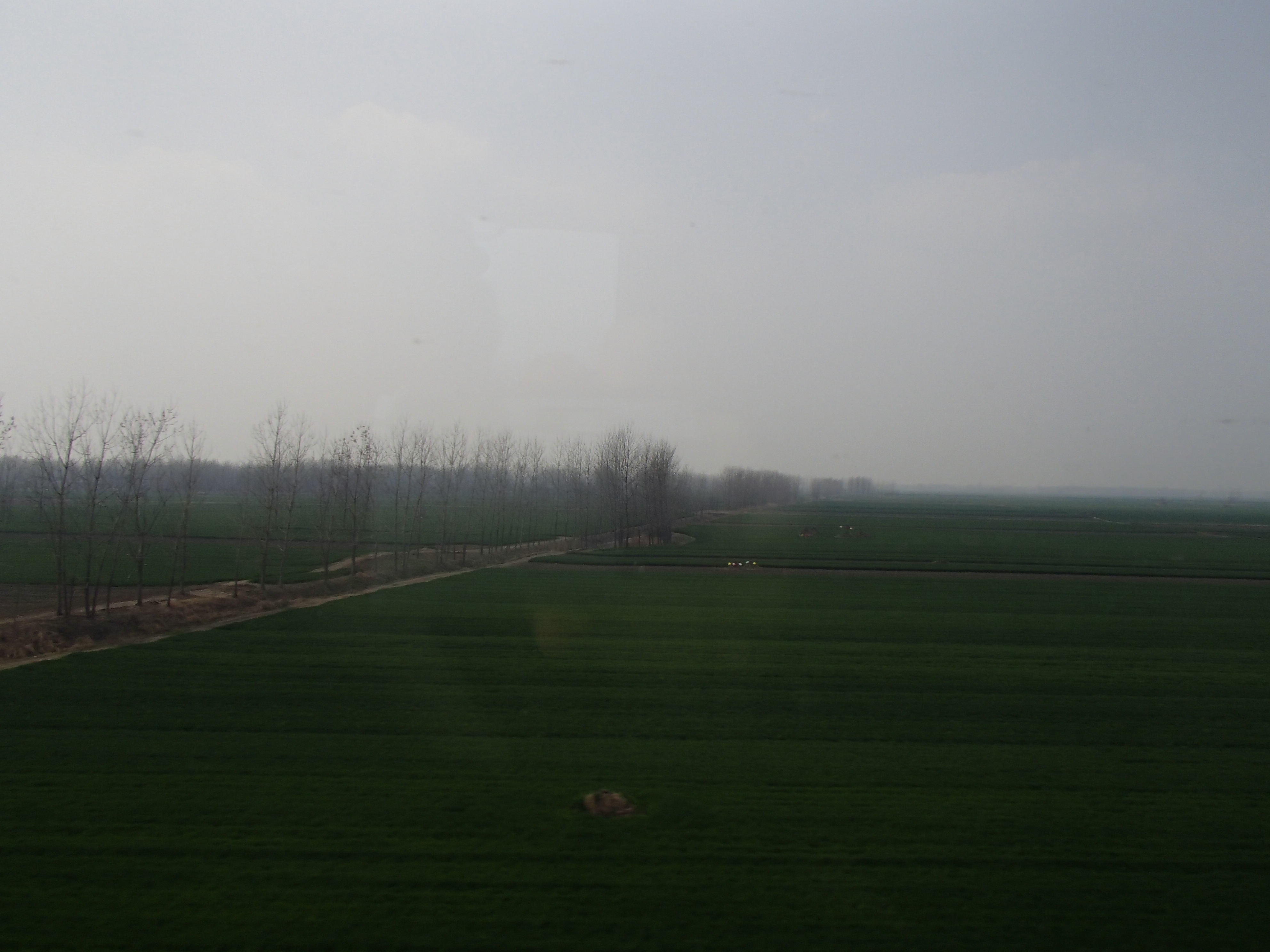
The bullet train is a very smooth ride. There was a lot of farmland to see out the window. It was quite flat most of the way. It became a bit hilly around Nanjing, but flattened out again before Beijing.

green field with randomly placed conical mounds

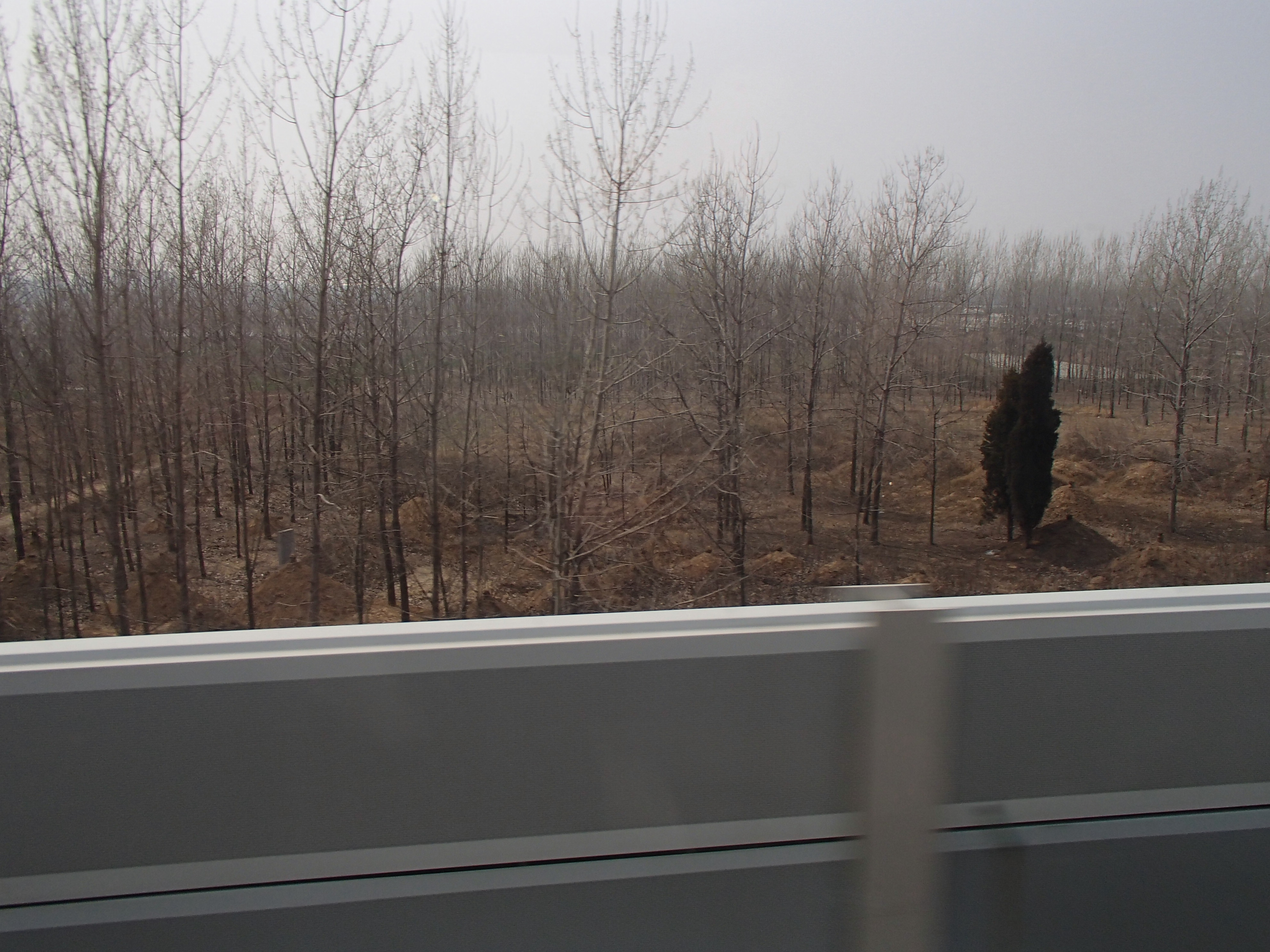
In the picture above, notice the mound in the field. This was very common and appears to be burial mounds. Some had grave stones and some had miniature buildings (as shrines I suppose). The information I have read online about Chinese burial rites says that they prefer to bury on hills, but there just aren’t any hills for miles and miles.

a group of trees with several grave mounds

There were also sites like the above where a large number of grave mounds appeared.

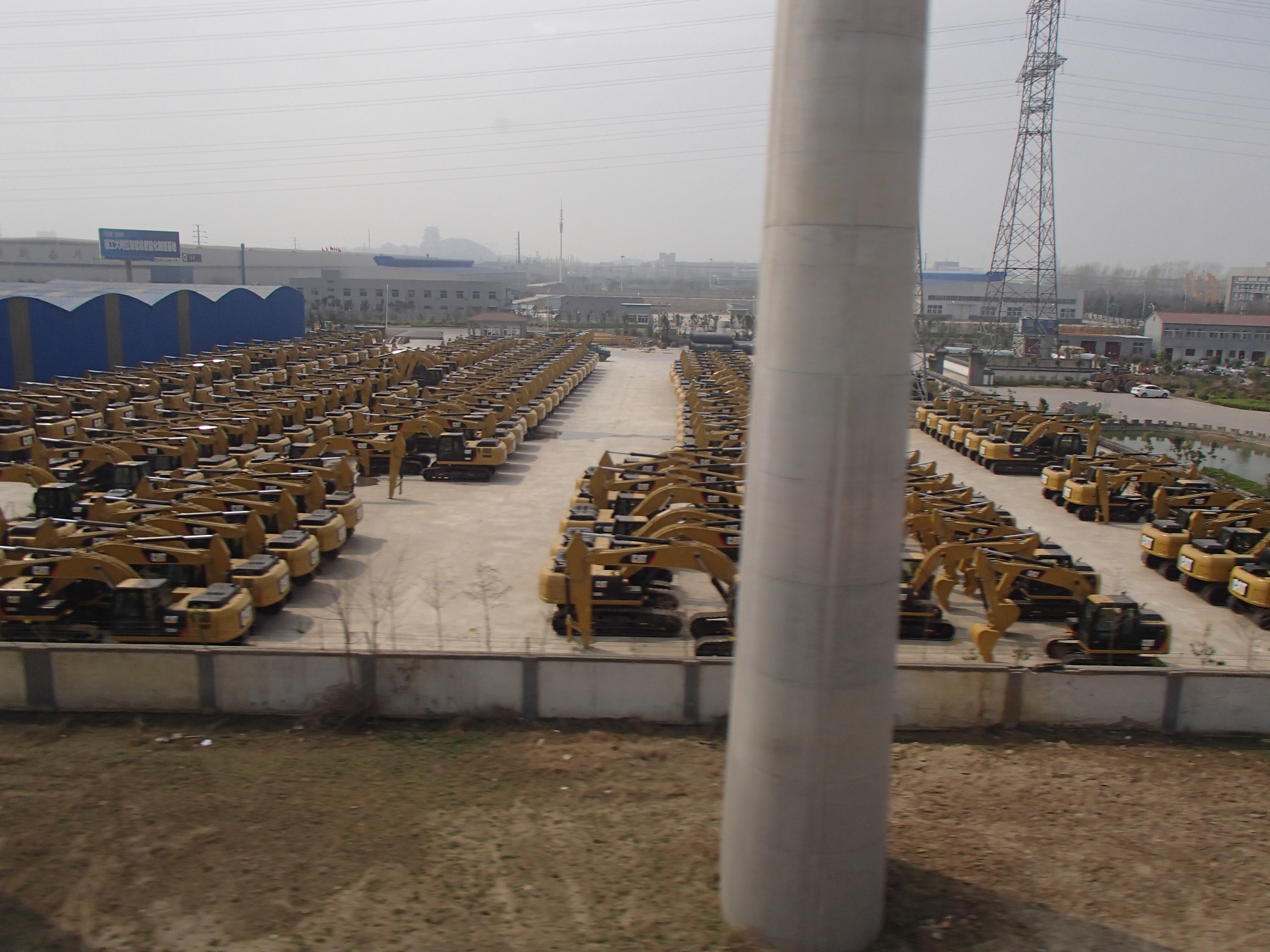
lot full of CAT heavy equipment vehicles

It appears that we also passed the Caterpillar (CAT) factory.

There really wasn’t any area that I would call “wild.” It was all being cultivated. There were frequent villages and every once in a while a city. I saw lots of roads, but very, very few vehicles, even parked around houses. There were a few vans, trucks and tricycle carts, but very few cars.

We are staying in a nice hotel in a historic area of Beijing. The neighborhood consists of long lanes called “hutong” that branch off of one main lane that goes through the center. The lane is lined with vibrant businesses, restaurants, and bars. We spent the first two days roaming around the hutongs.

Pictures from the Train Ride – click here 118 pictures
Pictures from Day 1 (Saturday afternoon and evening) – click here 74 pictures
Pictures from Day 2 (Sunday – hutong and Qianhai Lake) – click here 239 pictures
Pictures from Day 3 (Monday – hutong) – click here 76 pictures

Day 4 we went to the Forbidden City. It was quite amazing and beautiful. It took a huge toll on my feet, though, which is why Day 5 is a day of rest. We still have the Great Wall to squeeze in before we leave. Hopefully, my sore feet and injured knee will play along for one more day of walking and climbing.

Pictures from Day 4 (Tuesday – Forbidden City) – click here 380 pictures

h1

Thames Town, P.R.C.

February 28, 2015

Posted by Kanga. Please do not reblog.

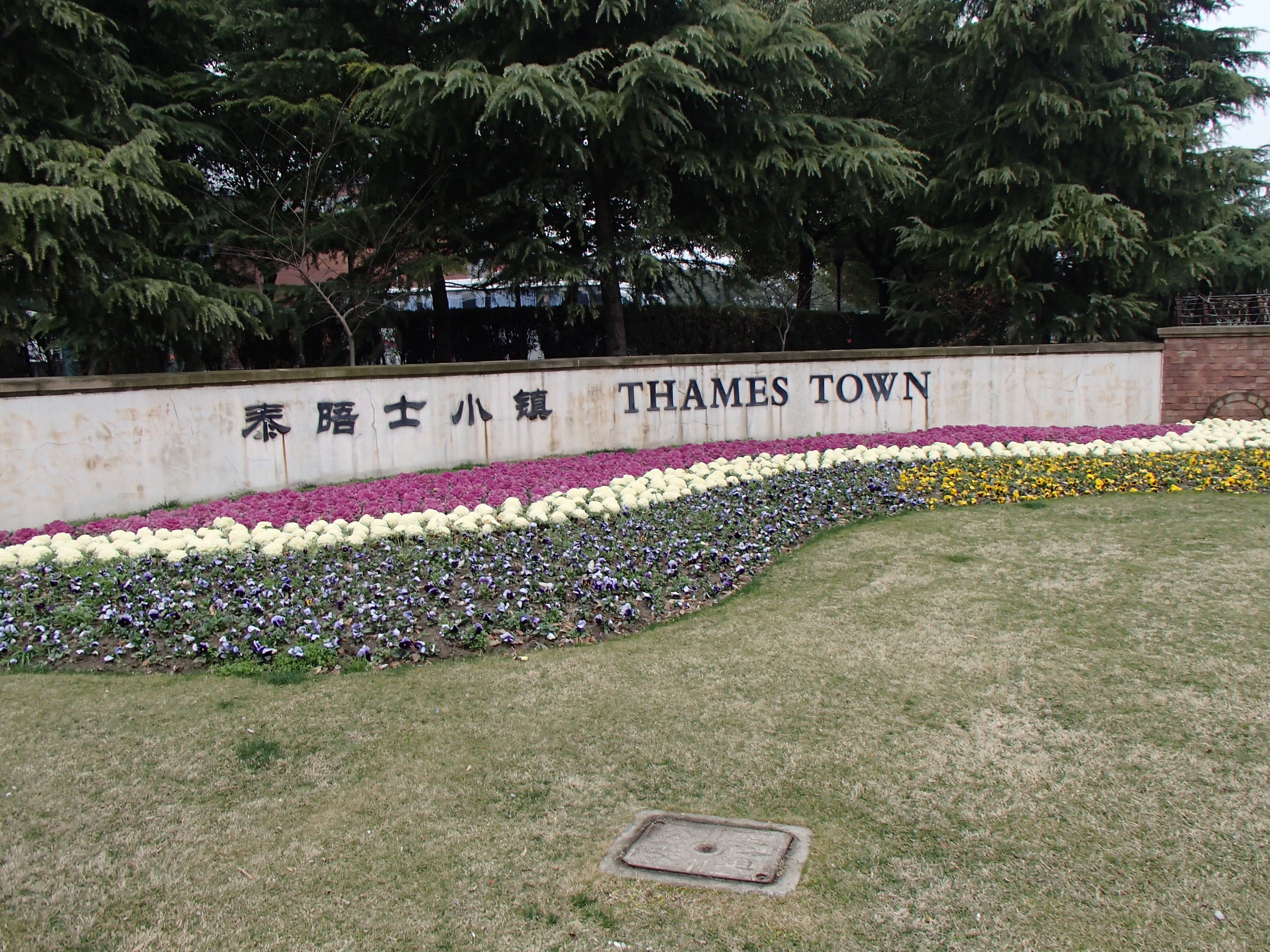
neighborhood sign

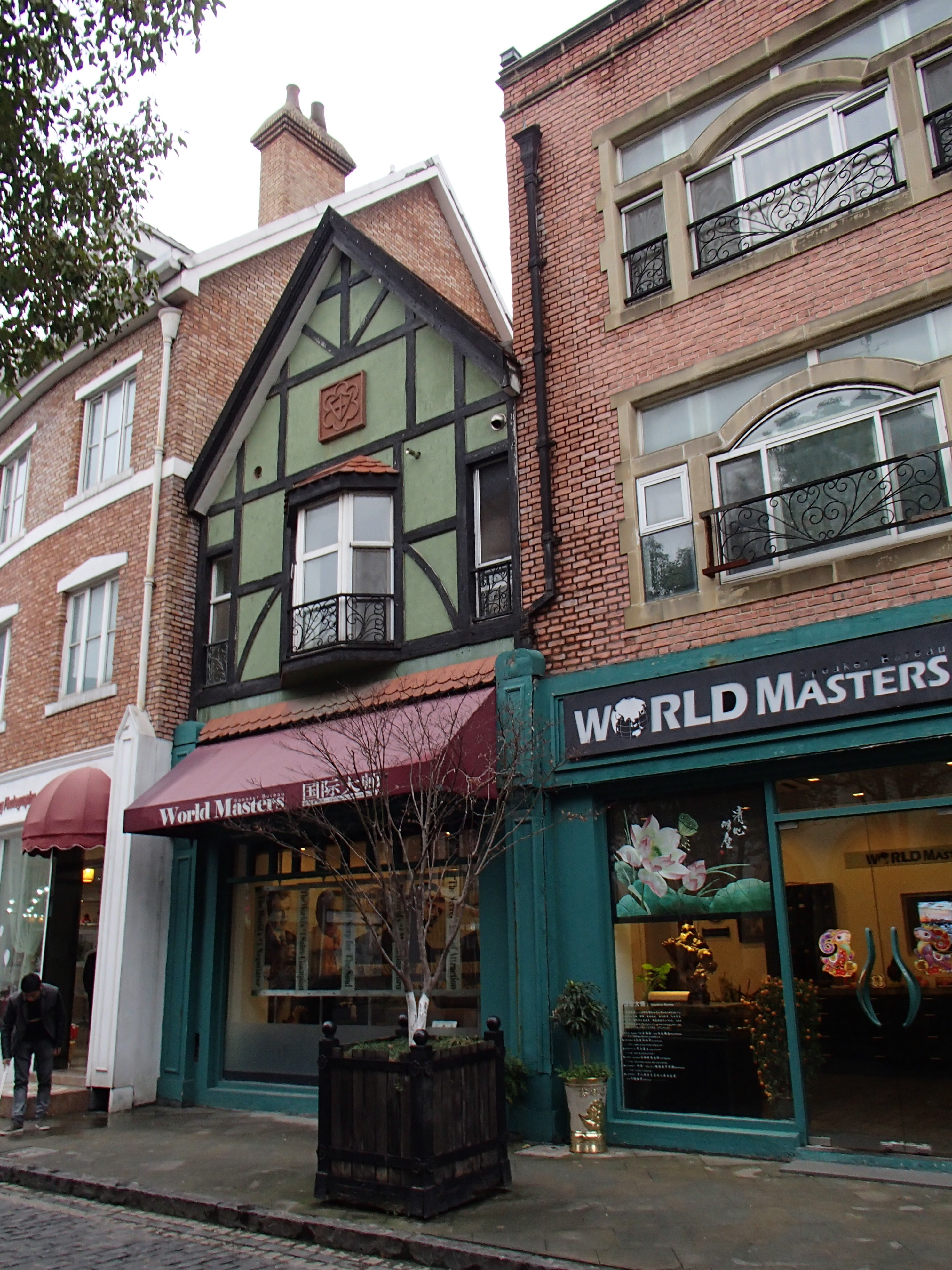
We hopped on the bus, the train, and the bus to get to Thames Town. What is Thames Town, you might ask. It is one of the nine towns of the One City, Nine Towns project. It is a housing project finished in 2006 designed to draw people out to the suburbs. The entire community is patterned after classic British market town styles. It has been referred to as a “ghost town,” but we saw plenty of people and many parked cars, so not so ghosty after all.

 buildings of different styles

The experience turned out to be more interesting than we expected. The town is actually very well designed and built. It does not look like a cheap knock off. They did a good job of mixing the architectural styles, much like the real London.

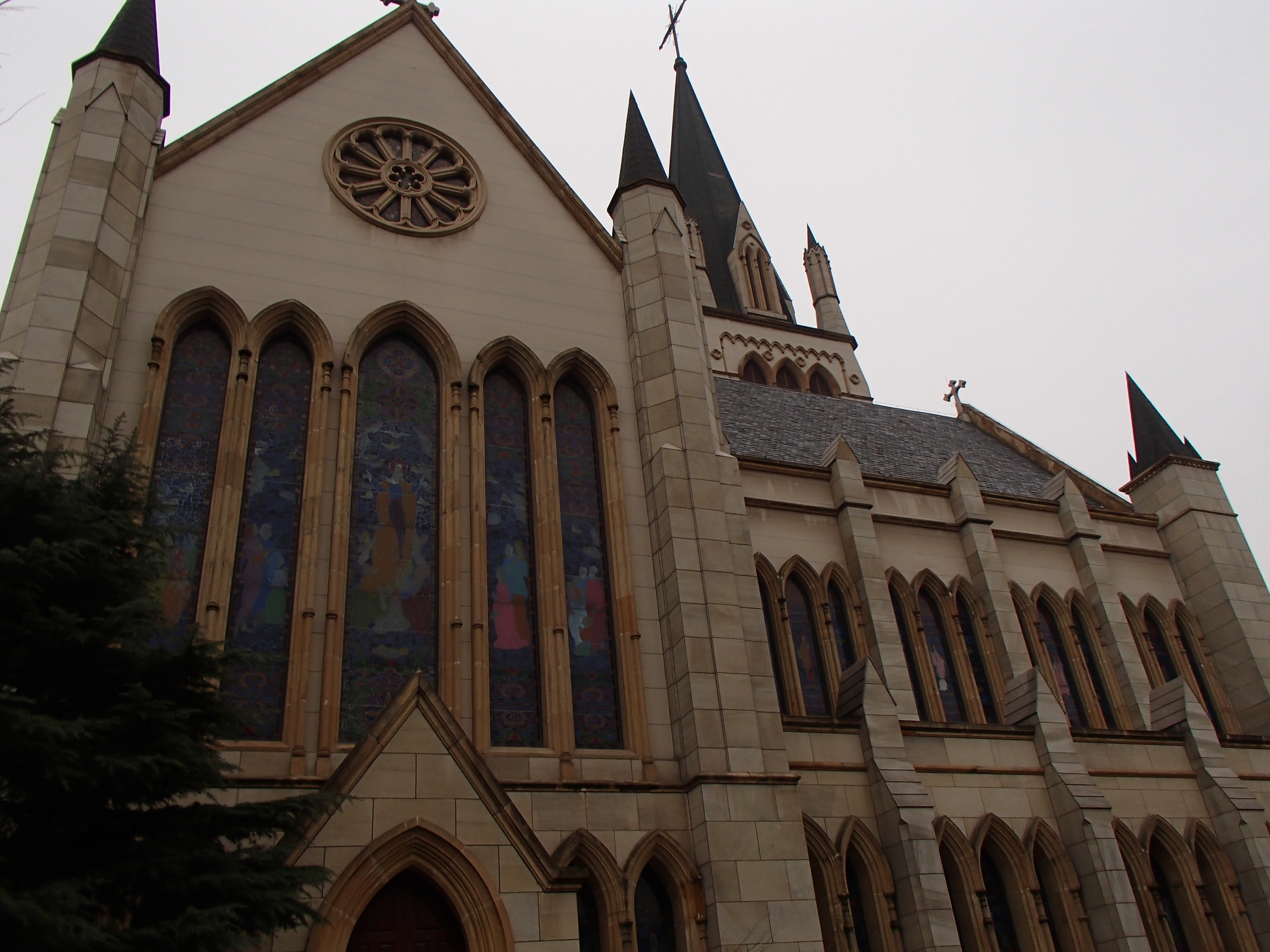
nineteenth century style English church

They even included this church modeled after Christ Church in Bristol. Unfortunately, it was locked up tight, so we could not see inside. We are very curious to see what is inside.

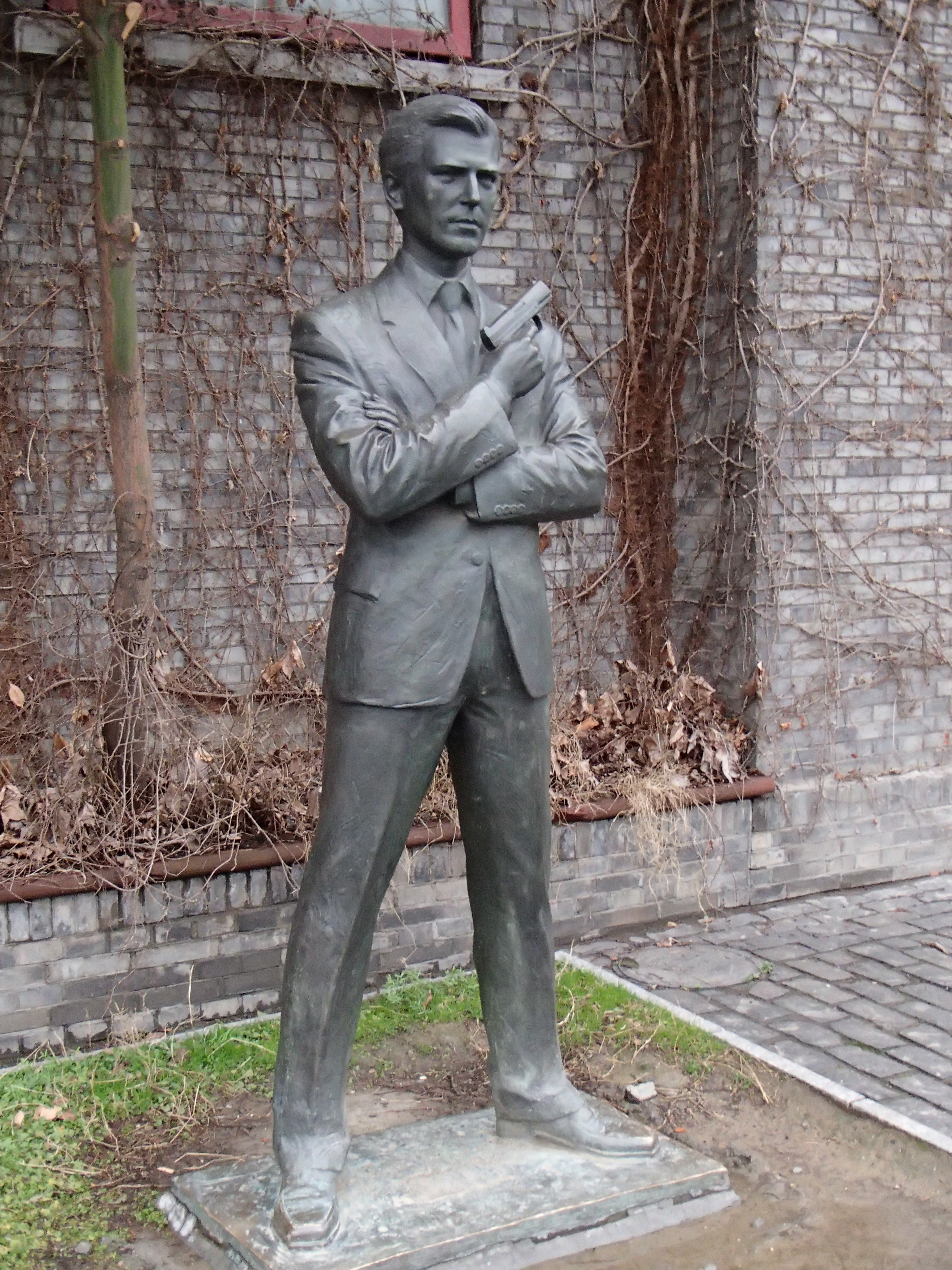
statue of James Bond as portrayed by  Pierce Brosnan

There are statues all over town. Some easily recognizable, like James Bond, Winston Churchill, and Princess Diana, but others are harder to pin down. Mostly writers of different eras.

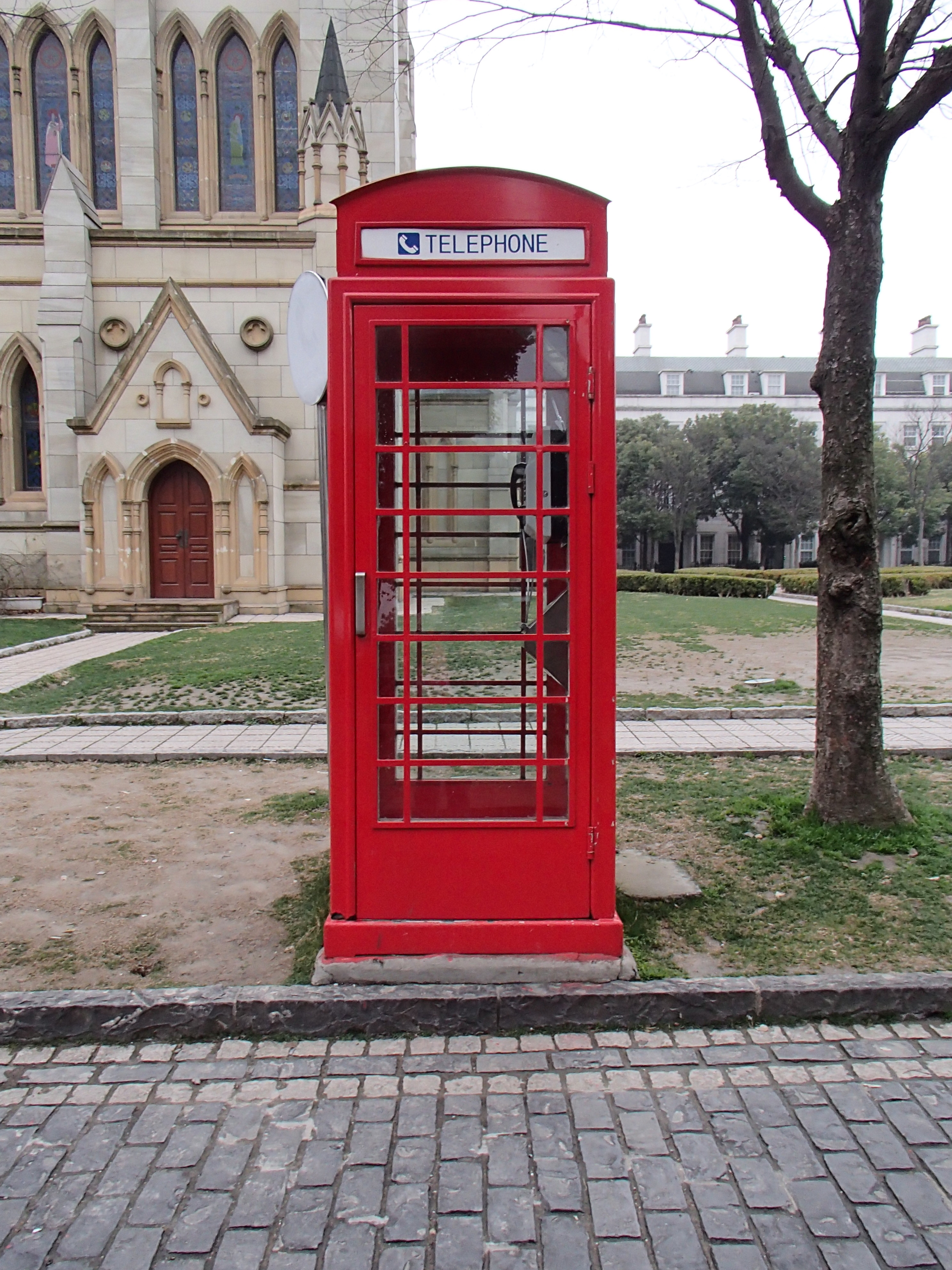
British red phone booth

There were red phone booths, but no blue police boxes.

It is a really lovely place. Too bad it is about 19 miles away from where I work. To see all the pictures, click here.

h1

Guyi Garden

February 26, 2015

Posted by Kanga. Please do not reblog.

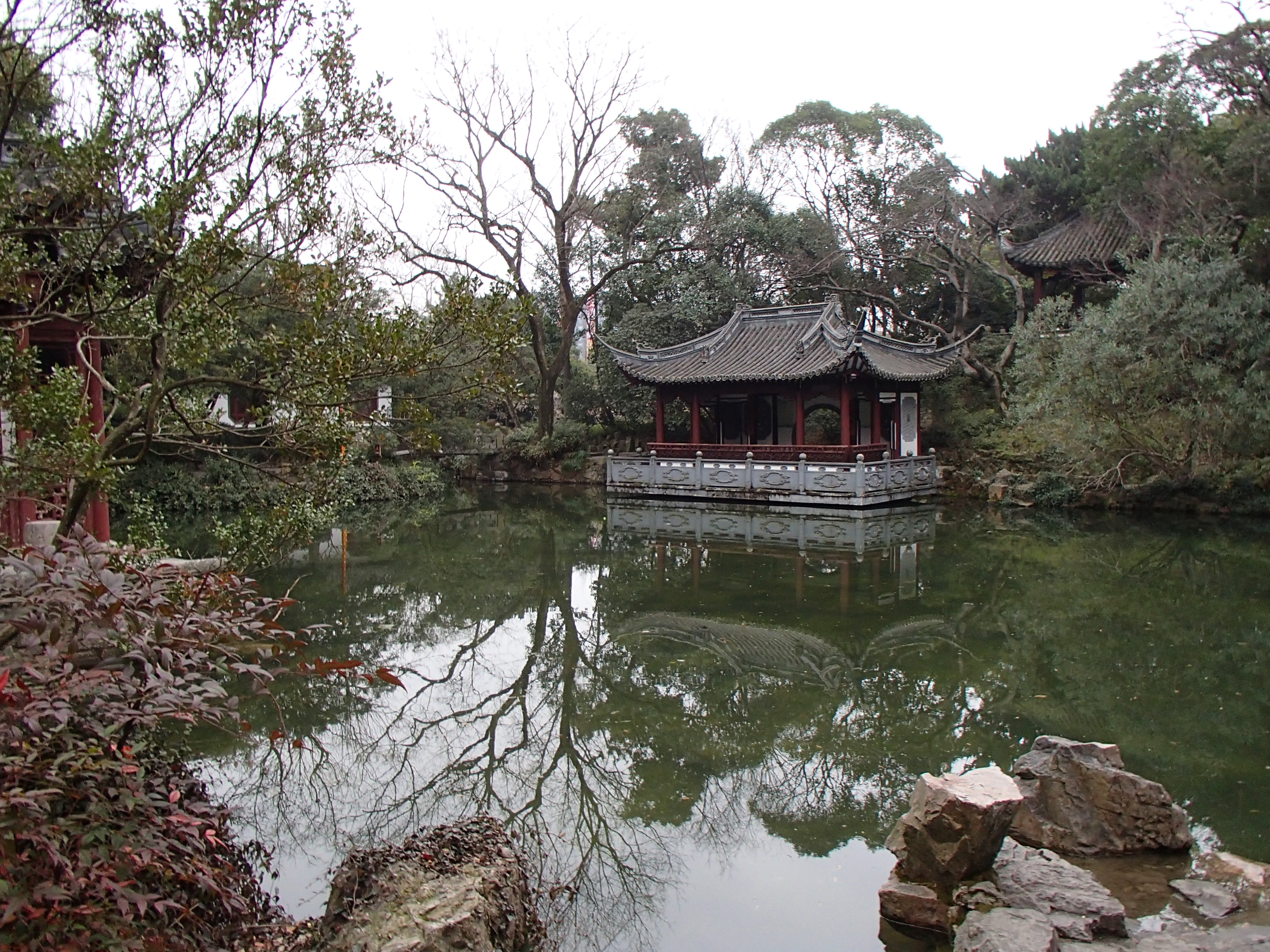
oriental garden and lake

We spent the afternoon in Guyi Garden. It was a long taxi ride (76 yuan – $12 USD – 45 AED). The admission is 12 yuan per person ($2 USD – 7 AED), so getting there is the expensive part. There is a metro station, but it is a bit of a walk. We took the metro home, but it was easier to find the place by taking a taxi.

The garden dates to the Ming Dynasty, as does Yuyuan Garden. It has been renovated multiple times since then.

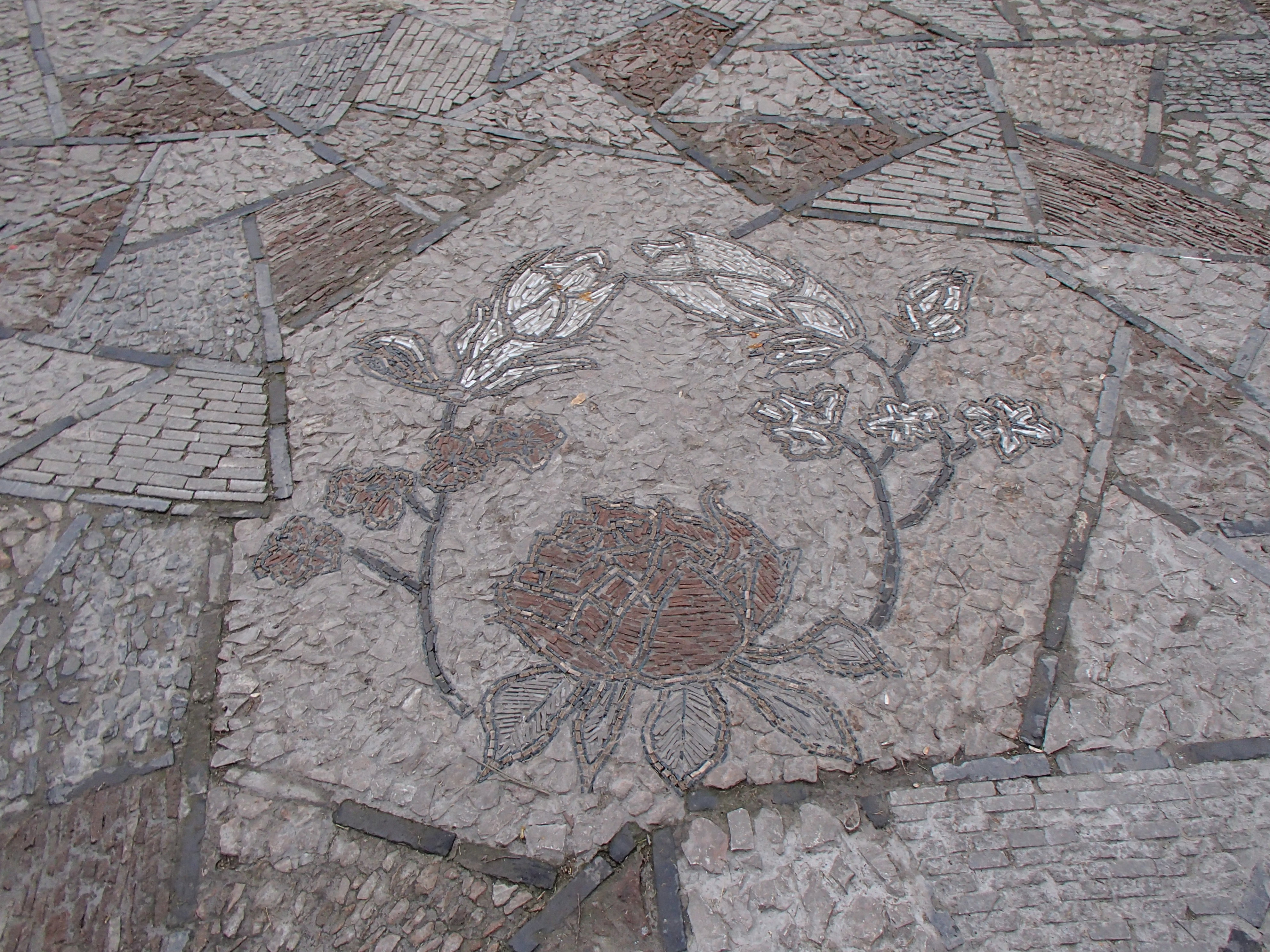
mosaic of lotus blossoms

There is art everywhere – in the stone walkways, in the ceilings of every structure, and in the stone structures. The beauty of nature is not overwhelmed by the human art. They really knew how to balance and co-exist with nature.

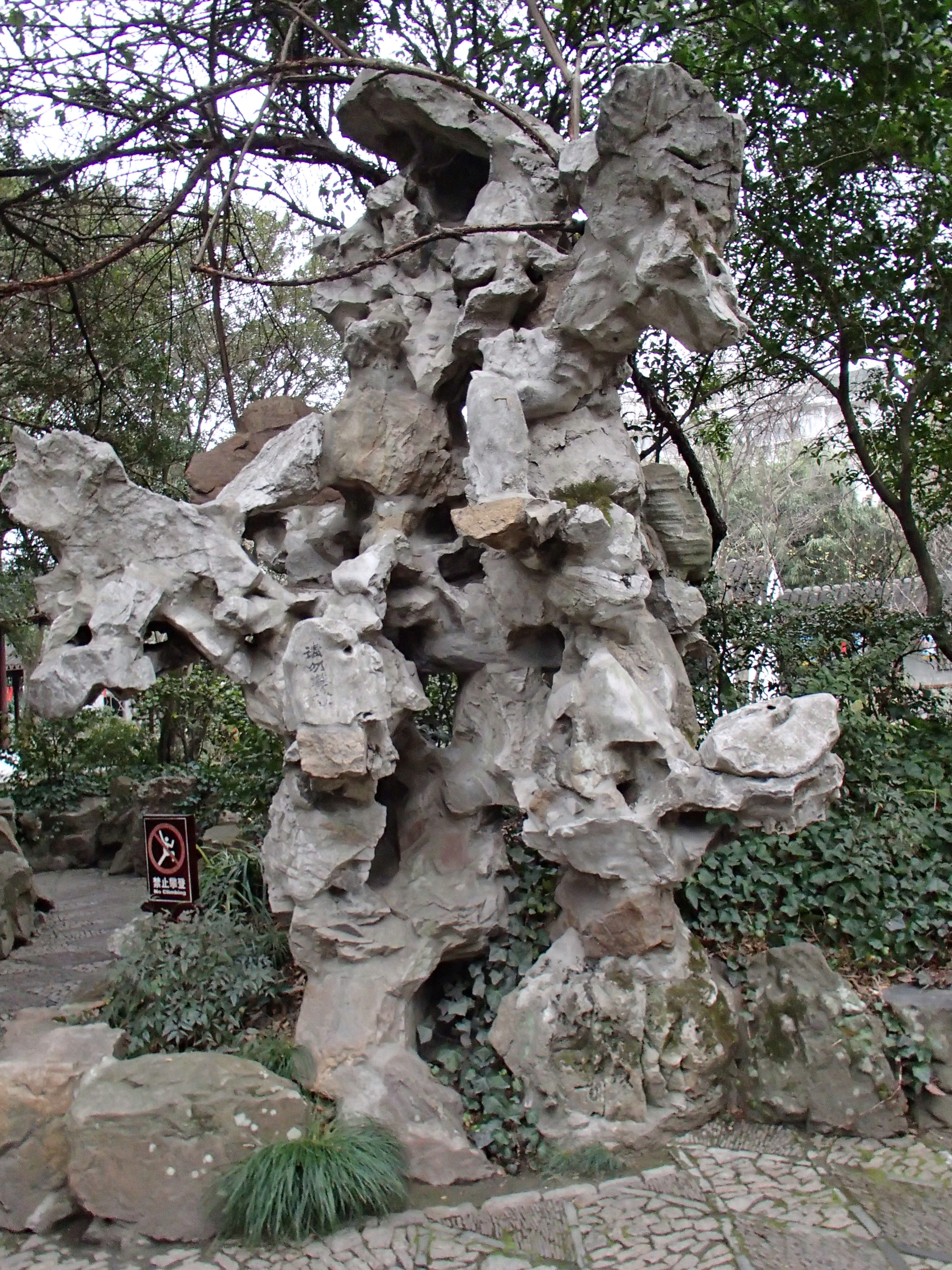
rock sculpture

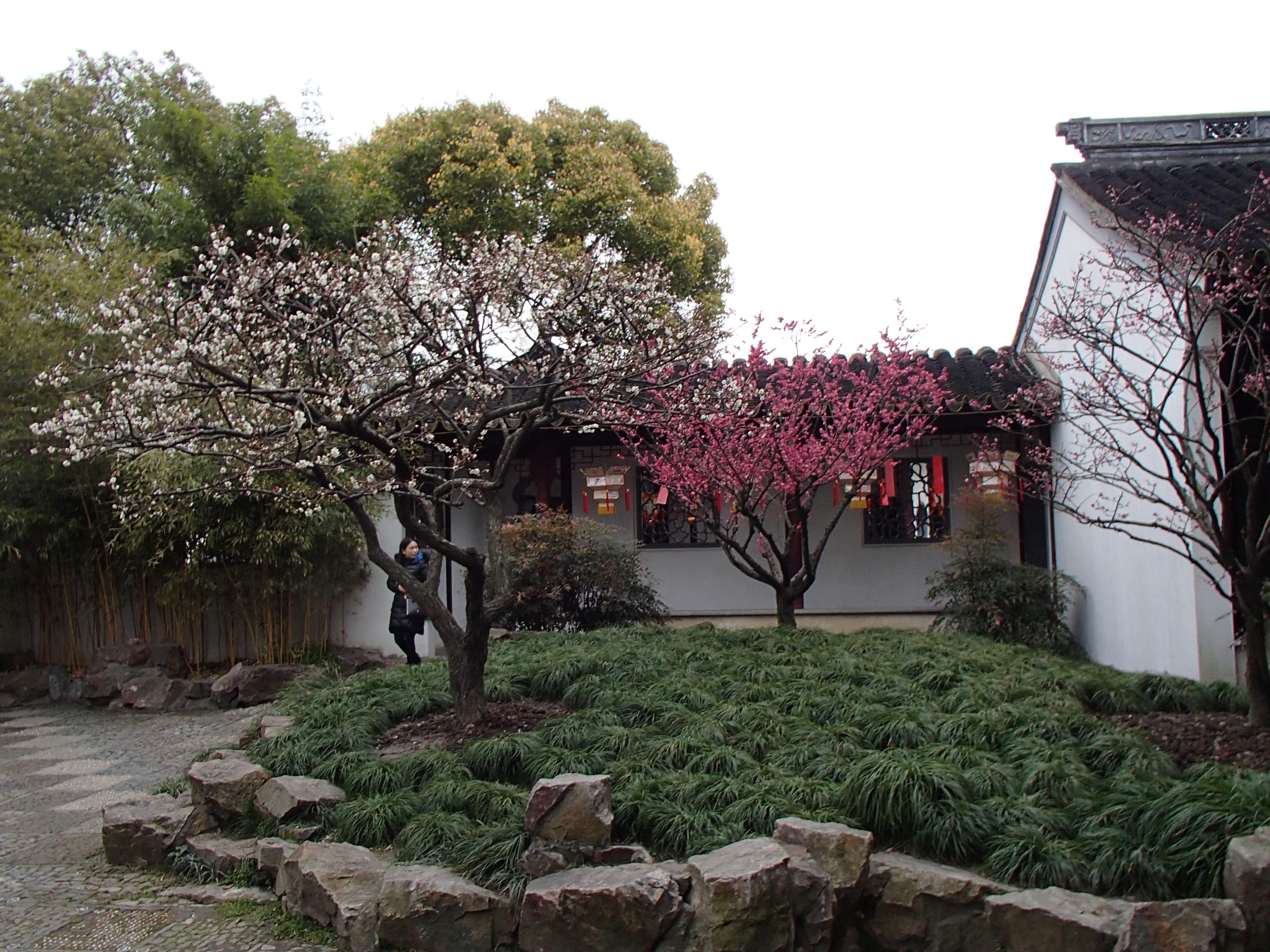
Spring is beginning. Trees are beginning to bloom.

white and dark pink flowering trees

To see all the pictures – click here.

h1

Disappearing Shanghai

February 25, 2015

Posted by Kanga. Please do not reblog.

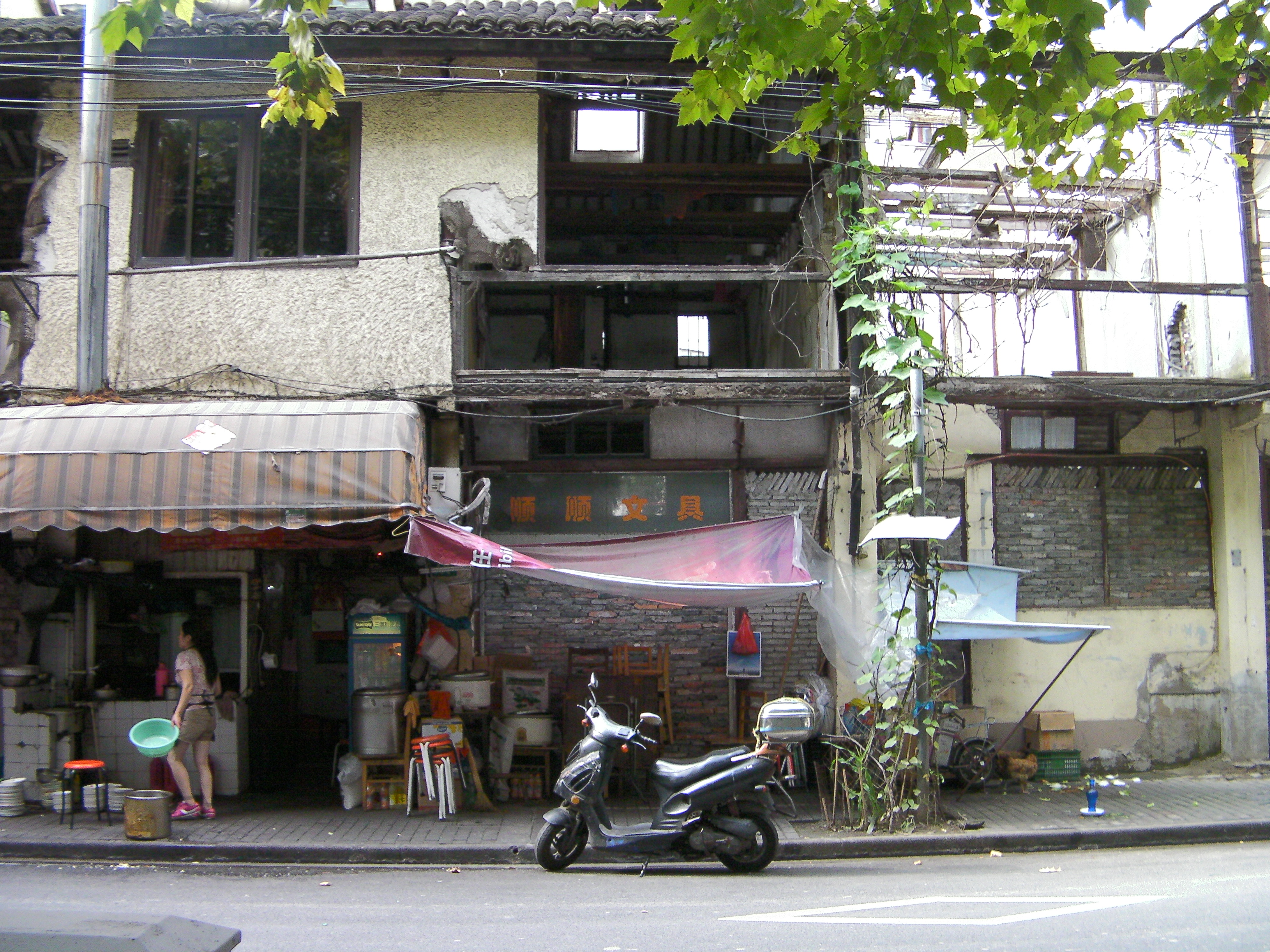
You might remember Dontai Lu, the antiques market. It has been under the process of demolition for months. This picture below is from September 2014.

partially demolished buildings still being used

The picture below was taken this week. Same street.

Dontai Lu area Feb 2015

Now you see it, now you don’t.

We took another stroll through the area this week. About half of the shops were closed, although this may be due to the Chinese New Year holiday. The ones that were boarded or bricked up are definitely closed forever. In a way it is sad, because some of these buildings were very beautiful “in their day,” but their day has passed.

To see all the pictures, click here.

h1

Exploring Shanghai History

February 19, 2015

Posted by Kanga. Please do not reblog.

First, you may have noticed that I have not posted in quite some time. Well over a month, in fact. I, too, noticed this and pondered it for a while, because I just have not felt like posting. It is not because we have not done interesting things. It seems to be because I am so happy here. While we were in the U.A.E. I was posting to prove there were good aspects. Things to be appreciated. I needed that to offset the parts that were miserable. Now that we are in China and the job is going very well and we are finding it very easy to live in China, I am not as motivated to post to the blog. So, my apologies for the long hiatus. I will endeavor to do better in sharing our happy adventures.

We have not been idle in the last month. We took a walking tour of the Jingjiang lilong neighborhood. (CityWeekend article about the tour – here. If you look closely at the first color picture in this article, you can see DaddyBird’s bald head on the right under the lamp.) For the photos I took – click here.

brick four story building

Most of these neighborhoods are being torn down, but this one might escape that fate as there were some important historical figures who lived here and when it was originally built, it was high quality architecture and craftsmanship, so is much more durable than some of the other neighborhoods.

art deco style door in old Shanghai municipality building

On another weekend, we took a tour of the municipality buildings constructed under Chiang Kai Shek. For more info – click here. To see my pictures, click here. The library building has been abandoned for quite some time, but is now under reconstruction and will be used as a library again. I look forward to seeing it restored to it’s former glory and purpose.

Today is the Chinese New Year. I am told that the celebrations will take several days. We will be getting out and about to do some touristy things.

What we have learned so far:

1. Chinese fireworks are LOUD and not heavily regulated. Airborne fireworks are available to the average Joe. Some are the sparkly starbursts we are all familiar with and some are just designed for noise making. They make a loud bang when ignited on the ground, then fly up into the air and make another loud bang. The timing of setting them off is up to the individual, apparently. Therefore, it sounded like a war zone in our neighborhood from about 7 pm to 12:30 am. I heard more fireworks at 6:30 am the next day.

2. If one was born in the year of the Goat (Sheep or Ram), one should wear red underwear to ward off bad luck. All year. That’s a lot of red underwear.

We wish you all Happiness, Prosperity, Longevity! (fu lu shou)


h1

What We Did on Our Christmas Vacation

January 8, 2015

Posted by Kanga. Please do not reblog.

tower lit in multiple colors at night

So, now that it is over, what did we do with our two week stay-cation? Prior to Christmas day, it consisted of going to Christmas markets around the city, drinking mulled wine or cider and eating cakes and cookies.

escalator surrounded by ocean theme painting

We took the Bund Sightseeing Tunnel (also known as the Huangpu River Pedestrian Tunnel). The picture above is the escalator down to the ticket area and pretty much the most exciting part of the tunnel sightseeing attraction. The Tunnel is kitchy and corny. We will probably inflict it on anyone who comes to visit us. (One caveat, we were there on a very low crowd day. I would not stand in line for this or put up with being crammed into the tram with too many people.) To experience a video of the tunnel experience, click here. 

bowls of rice noodles with toppings, bowls of broth, and bowls of black gelatin

We ate interesting food, of course. These are freshly made rice noodles topped with peanuts, green onions, and a few other unexplained but delicious things. There are bowls of broth and bowls of black gelatin. The menu was simple – two entrees and two “drinks.” The gelatin was in the drink category. There was no English on the menu and the clerk pointed to the Chinese writing to ask what we wanted. This is how we ended up with gelatin instead of glasses of liquid. It was refreshing, so it all worked out in the end.

miniature of Shanghai city

We went to a few museums, including the Shanghai Urban Planning Exhibition Hall which houses the miniature of Shanghai seen above. It isn’t exactly accurate. It contains a few flashy buildings that don’t actually exist. Perhaps they were in the “to be built” stage when this was created, but haven’t materialized. (To see all the pictures, click here.)

bronze vessel with eight yaks on top

The Shanghai Museum in People’s Square has a very interesting collection of bronze and pottery items. We need to go back earlier in the day because we were less than half-way through at closing time. (To see all the pictures, click here.)

dragon like ceramic statue

Our last vacation day was spent in Qibao Water City, which is an old city that was swallowed up by Shanghai.

crowded pedestrianized lane

It was a mildly crowded day. Not bad.

canal between old style Chinese houses

The weather was lovely. Strangely warm for January. Once we got past the entrance to the city (the crowded picture above), it was pleasant and not crowded. (To see more pictures, click here.)

extremely tiny sculptures in a display case

Here we found the Zhou Miniature Museum which contains the sculptures of a father and daughter. Entrance cost 10 yuan ($1.80 USD or 6 AED). Totally worth it (and more). Many of the items that we had seen at the Shanghai Museum (bronze vessels, bronze axe heads, porcelain sculptures) were recreated here in miniature. One should definitely go to these museums in this order. (More pictures here.)

fat golden Buddha statue

Next, we stopped in at the Qibao Buddhist temple. While sitting on a bench to give my feet a little break, a funeral procession went by – monks followed by family members carrying paper offerings to burn for the dead. Off to the right, out of sight, we could hear the monks singing and then the procession went back by returning to the temple. (To see all the pictures, click here.)