
Kandora Chic
December 1, 2011Posted by Kanga.
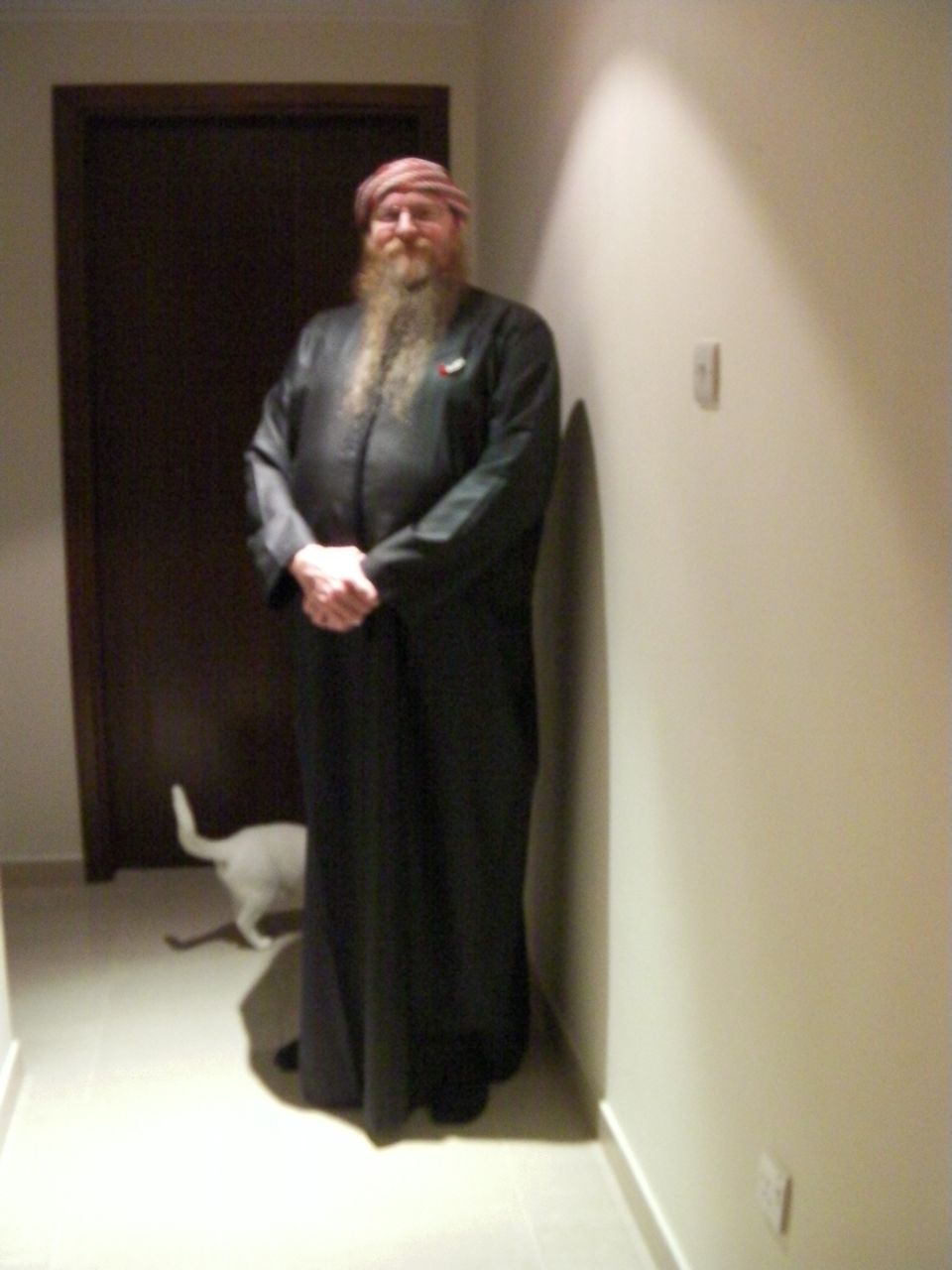
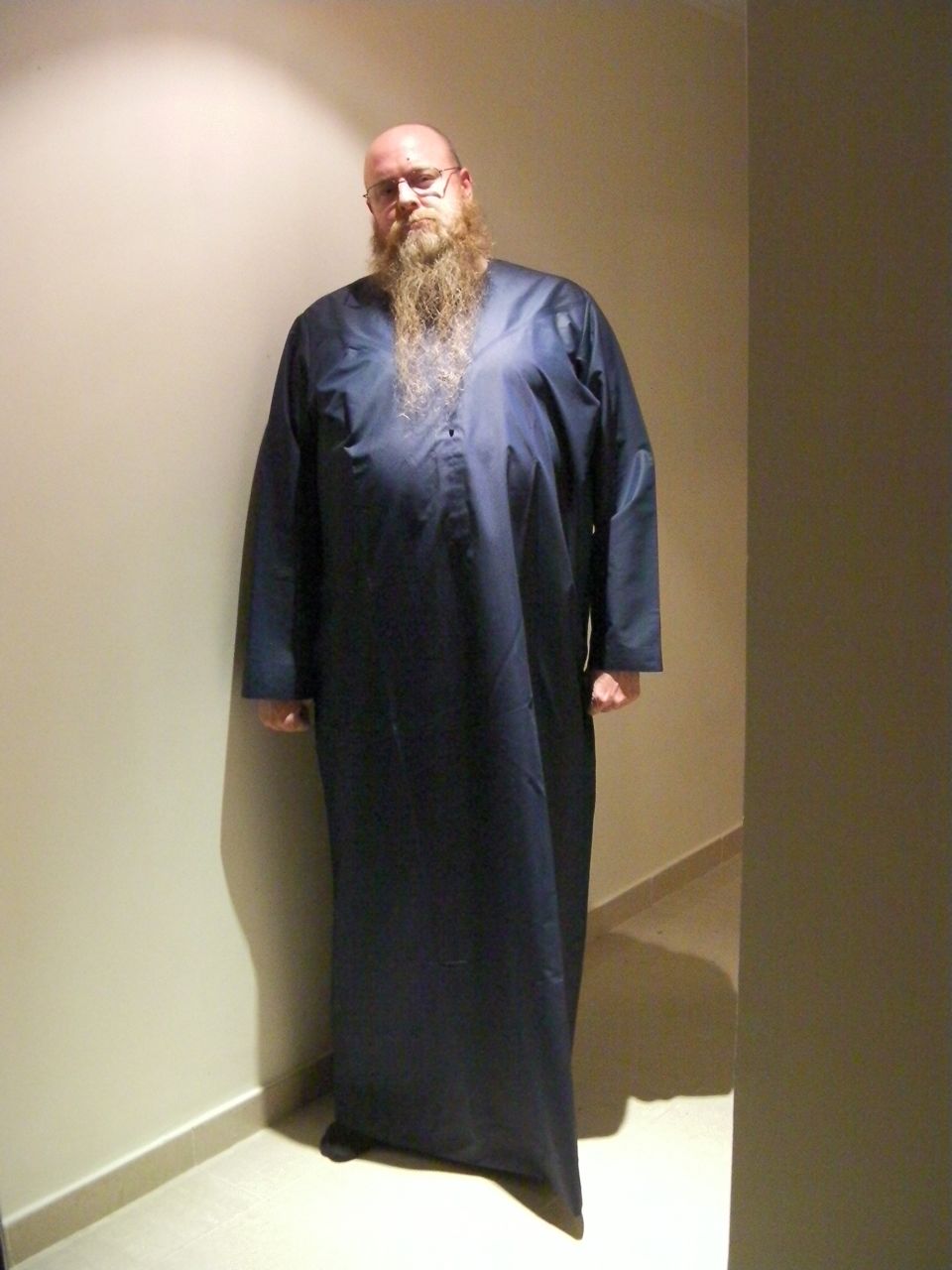
The kandoras we ordered on Saturday were ready for pick up today. So, nothing would do, but a quick trip to Dubai to pick them up.
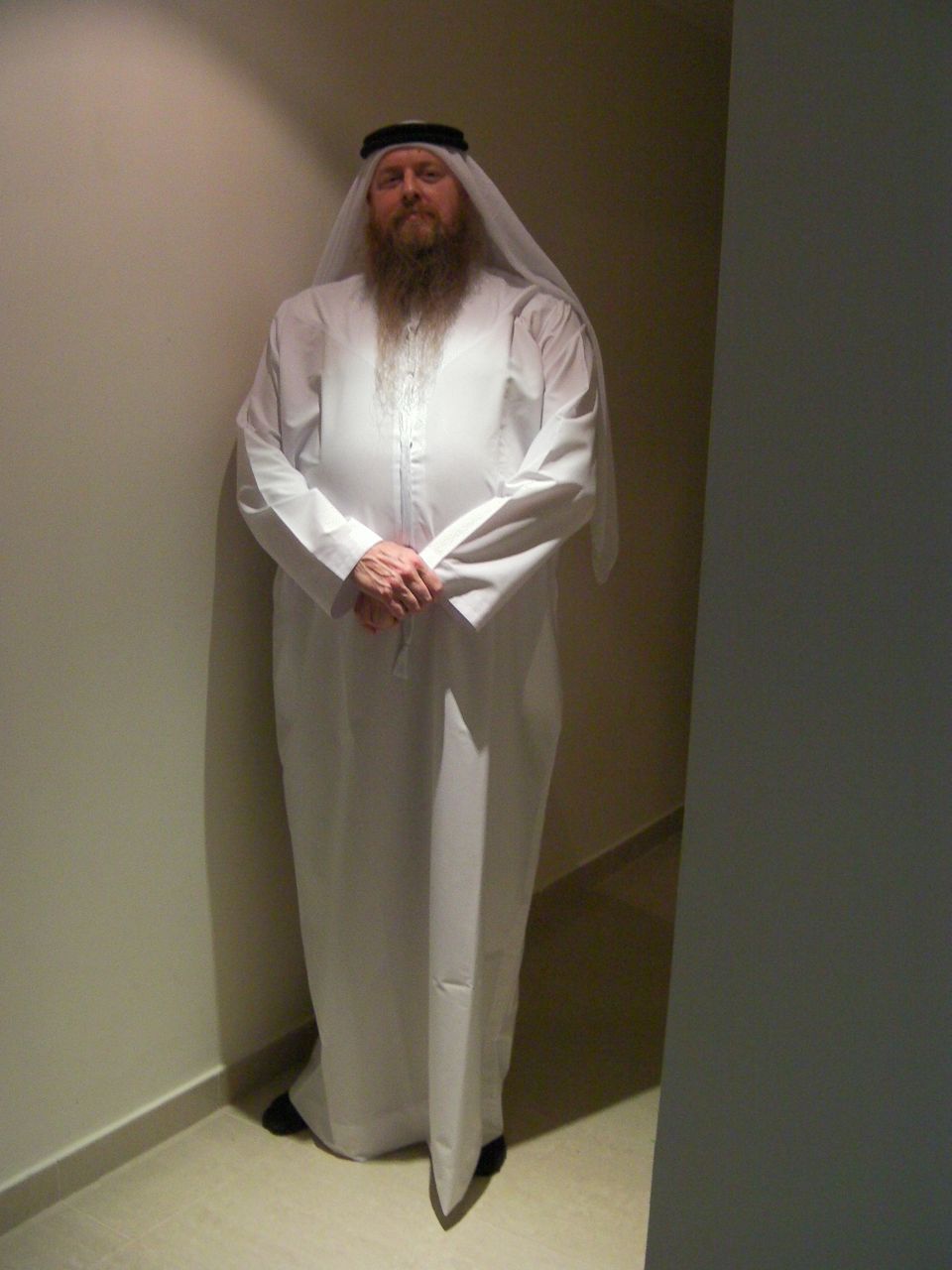
The white really shows off DaddyBird’s beard, don’t you think?
Oliver got under the black kandora, playing hide and seek, but the white one freaked him out. Maybe he doesn’t like the competition.
 DaddyBird
 kangayayaroo

Nice there Daddybird! And Kanga, when do you get decked out in hijab and burqa? Looking for those pictures soon. Just wondering, will Daddybird be wearing these on a daily basis, or just for special occasions? And if special, what kind of special?
Kanga wore an abaya and shayla today when we went to the UAE National Day celebrations. A friend took a picture of us; we’ll share it when we get a copy. Expats wearing local attire is very appropriate and accepted on special occasions such as national holidays here, so I’ll be doing that, of course. Our Emirati friends in Dubai are very much in favor of me wearing a khandoora, so I’ll likely we do so when we get to hang out with them in the future. In general, Westerners wearing local attire is OK or sometimes even welcomed by locals- as long as they are doing so respectfully and not doing anything that would be considered ‘haram’ or culturally insensitive- and I would like to do so on a regular basis, especially out here in Fujairah. But I only intend to do so as my ability to speak Arabic improves, partially to be more culturally sensitive; wearing local attire and being able to speak the local language really aught to go together, I think.
Looking forward to the pictures and would love a review of the discrimination for the clothing (seems it was explained when you first moved to the UAE about the names of the clothing and definitions – burqa/abaya/shayla.)
The original post is here – https://livingthetravelchannel.wordpress.com/2008/08/26/living-the-travel-channel-clothes/ I’m dying to edit it, but will leave it be. Use of the word burqa differs from country to country. In the UAE, it refers only to the old fashioned face mask that is worn only by the older generation. The basics are the abaya (robe covering from neck to floor) and the shayla (scarf covering the hair). A veil (niqab) covers the lower portion of the face leaving only the eyes exposed. The most conservative version would include covering even the eyes with a thin scarf or lace that they can see through and black gloves to cover the hands.