
Fujairah Historical Sites
January 4, 2014Posted by Kanga. Please do not reblog.
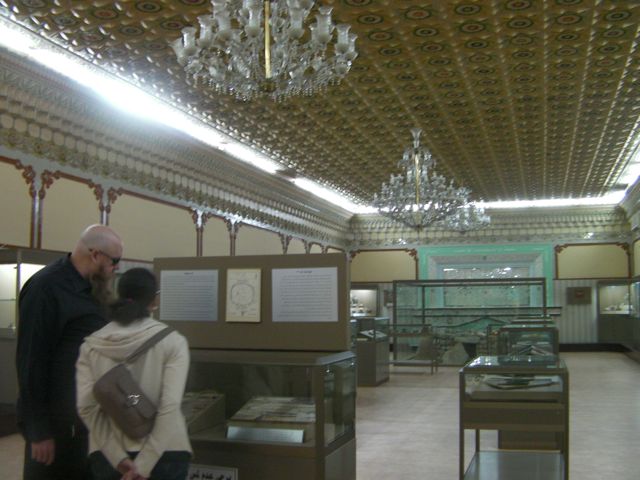
We took BabyBird on a mini Fujairah history tour beginning with the Fujairah Museum.
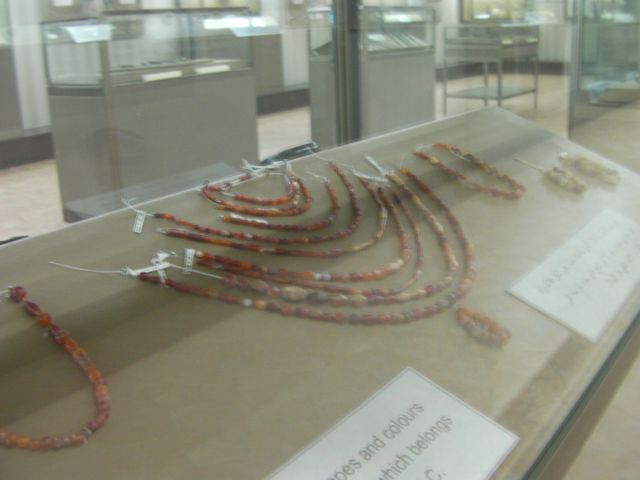
The museum has displays of artifacts from ancient sites – forts, burials, etc. – that have been excavated. Carnelian and sea shell jewelry were prominent in the days before pearling.
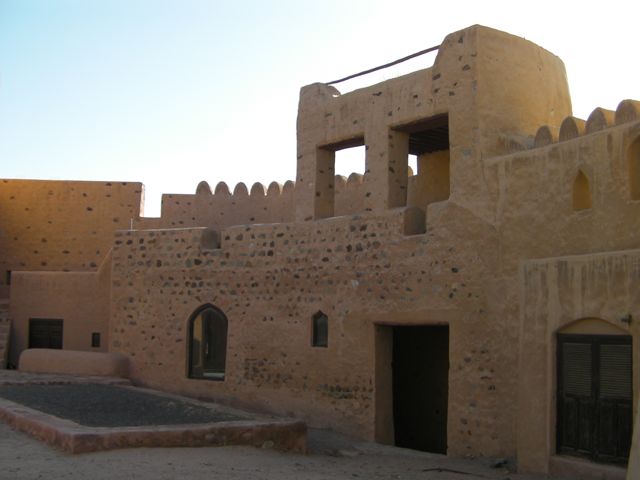
The Fujairah Fort was open (which has been rare in the past) so we took the opportunity to go inside. The fort is approximately 300 years old and has been recently restored.
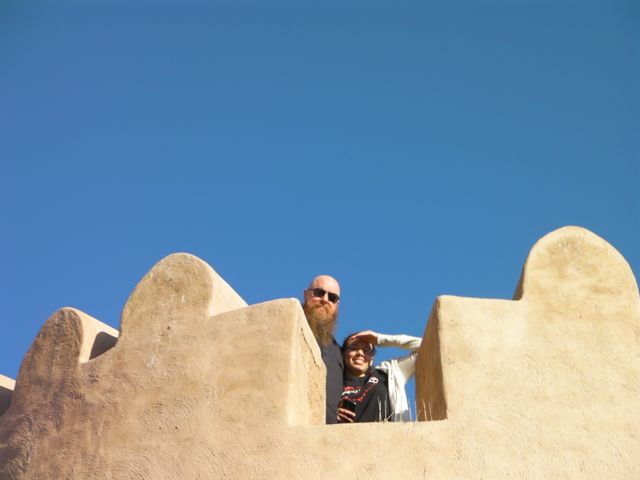
DaddyBird and BabyBird climbed the tower for a good view of the area.
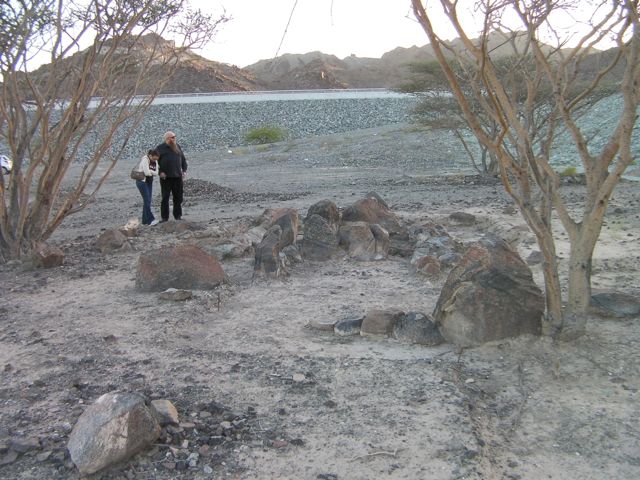
Then we drove up the Madhab wadi (valley) to see an ancient copper smelting archeological site.
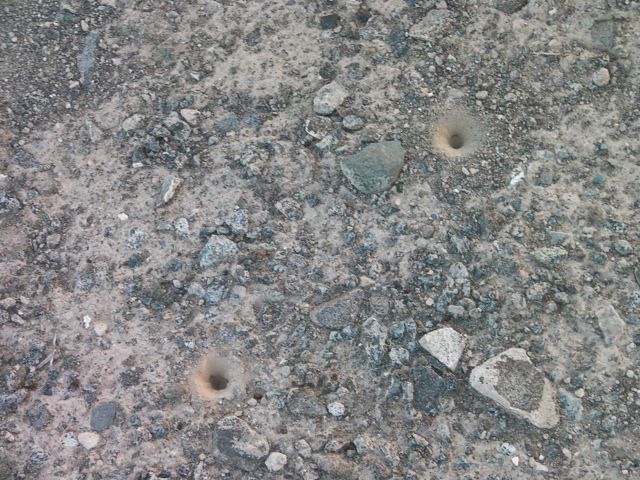
I also noticed the many funnel shaped holes which are most likely ant lion traps. (National Geographic video of ant lions)
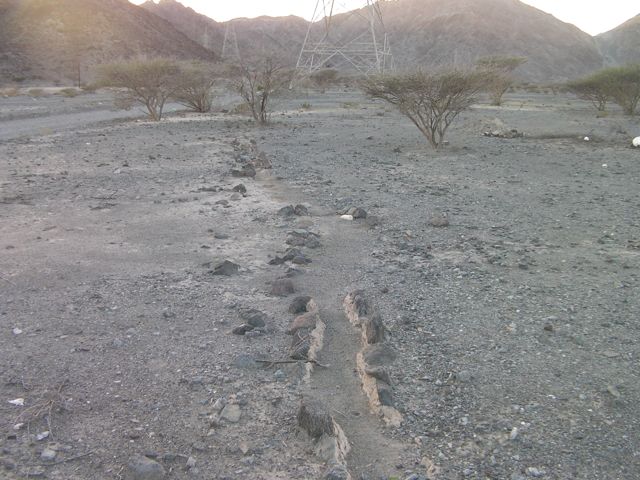
Not far away are the remains of an ancient falaj (water channel) which was used to bring water to a date palm garden. Unfortunately, a gravel road has cut through this channel.
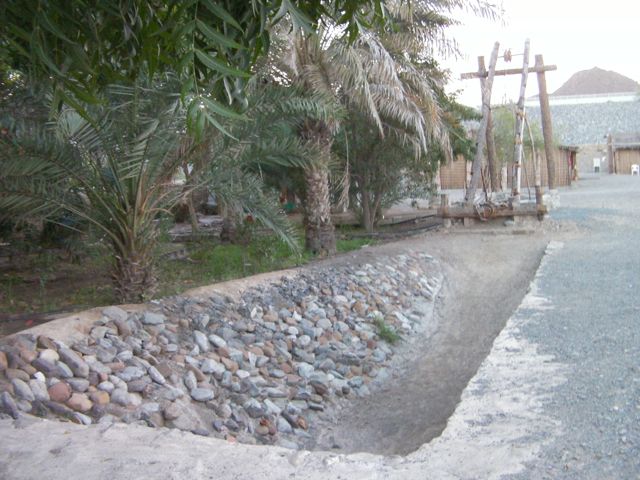
Next, we stopped in at the Fujairah Heritage Village. The village includes models of several types of traditional houses and buildings. Above is a model of a typical well and watering system used in date palm gardens. A bull would walk down into this trough pulling the water “bucket” up out of the well. The water would then be poured into a channel (falaj) that conducts the water into the area around the trees.
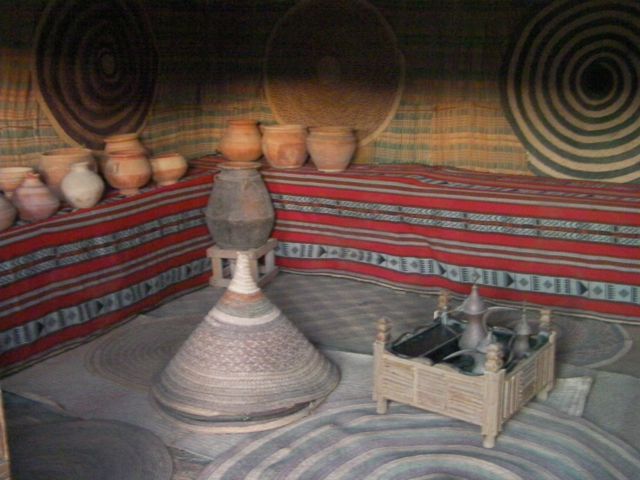
This is an interior display showing mats woven from date palm branches, clay pots, and a coffee pot ensemble. The coffee pot is nestled in a square container that would have had hot coals in it to keep the pot hot.
There is very little written history about this region, even as little as 300 years ago, so the physical sites and artifacts are even more precious. Unfortunately, they are disappearing under new roads, dams, and buildings.
 DaddyBird
 kangayayaroo

Leave a Reply